How to Properly Store and Display Your Diecast Car Collection

Understanding the Materials Science Behind Diecast Preservation
Before you decide where to house your collection, you must understand what you're actually preserving. A diecast model isn't simply a metal toy. It's a complex assembly of zinc alloy (typically Zamak 3 or 5), injection-molded ABS plastics, acrylic lenses, rubber tires, water-slide decals, and multiple paint layers including base coats, color coats, and clear coats. Each material responds differently to environmental stressors.
Zinc alloy, the backbone of quality diecast construction, is susceptible to zinc pest—a crystalline corrosion that occurs when the alloy's purity is compromised or when it's exposed to moisture over extended periods. Paint systems, particularly older lacquer-based finishes, continue to outgas solvents for years. Rubber compounds vary wildly in formulation; some remain supple for decades, others harden into plastic within five years. Understanding these material interactions is the foundation of proper collection care.
Environmental Control: The Non-Negotiables
Temperature Stability
Fluctuating temperatures cause materials to expand and contract at different rates. Metal bodies expand faster than plastic interiors. Paint layers stretch while base materials shift underneath. The result? Stress fractures in bodywork, lifting tampo prints, and delaminating decals.
Target range: Maintain ambient temperature between 65°F and 72°F (18°C–22°C). More critical than the specific temperature is stability—swings exceeding 10°F within 24 hours will eventually damage your collection. Avoid attics, unheated garages, and rooms with southern exposure that experience solar heat gain. Basements can work if humidity is controlled, but ground-level interior rooms offer the most stable microclimate.
Relative Humidity Management
Humidity is the silent killer of diecast collections. Above 55% relative humidity, you're inviting oxidation on metal components and providing ideal conditions for mold growth on cardboard packaging and fabric interiors. Below 30% humidity accelerates rubber degradation and causes plastics to become brittle.
Target range: 40%–50% relative humidity. Monitor with a digital hygrometer placed at collection level—not on a shelf six feet above where readings differ significantly. If your environment runs humid, use a dehumidifier. In arid climates, introduce moisture through passive evaporation trays (never place water sources directly near models). Silica gel packets in sealed storage provide a buffer, but they're temporary solutions, not climate control.
Light Exposure: The Gradual Fading You Won't Notice Until It's Too Late
Ultraviolet radiation breaks down paint pigments and plastics through photodegradation. The damage is cumulative and irreversible. LED lighting has revolutionized display lighting—it's UV-free and generates minimal heat. Incandescent bulbs are unacceptable; they emit significant UV and create thermal gradients that stress materials. Fluorescent tubes vary by phosphor coating but generally emit enough UV to cause fading over time.
Best practice: Position displays away from windows. If natural light is unavoidable, apply UV-blocking film to glass and use blackout curtains during peak sunlight hours. For artificial lighting, use 3000K–4000K LED strips with a Color Rendering Index (CRI) above 90. This temperature range shows paint colors accurately without the harsh blue cast of daylight-temperature LEDs.
Storage Solutions for the Serious Collector
Original Packaging: To Keep or Not to Keep
This is where I diverge from some curators. Original packaging has value, but it also poses risks. Cardboard absorbs moisture and can transfer acids to model bases. Plastic blisters yellow and become brittle. Foam inserts, particularly those manufactured before 2000, often contain chemicals that react with paint and metal.
If you're storing in original boxes:
- Remove models from foam inserts if the foam shows any discoloration, crumbling, or oily residue
- Store boxes in archival-grade polyethylene bags to prevent moisture absorption
- Keep boxes vertically oriented to prevent crushing; horizontal stacking concentrates weight on lower boxes
- Inspect annually for insect activity—cardboard attracts silverfish and carpet beetles
Display Cases: Engineering Matters
Acrylic cases dominate the market, but not all acrylic is created equal. Extruded acrylic is cheaper but contains internal stresses that cause crazing (microscopic cracking) over time. Cast acrylic is optically superior and chemically stable—worth the 40% price premium. Glass cases eliminate static electricity concerns but introduce breakage risk and significant weight.
Case specifications to demand:
- UV-filtering properties (blocks 98%+ of UV-A and UV-B)
- Removable access panels that seal with gaskets, not magnetic strips that lose effectiveness
- Integrated dust filtration or positive-pressure design
- Shelves rated for 15+ pounds per linear foot (diecast is heavier than it appears)
- Adjustable shelving in 1-inch increments to accommodate varying scales
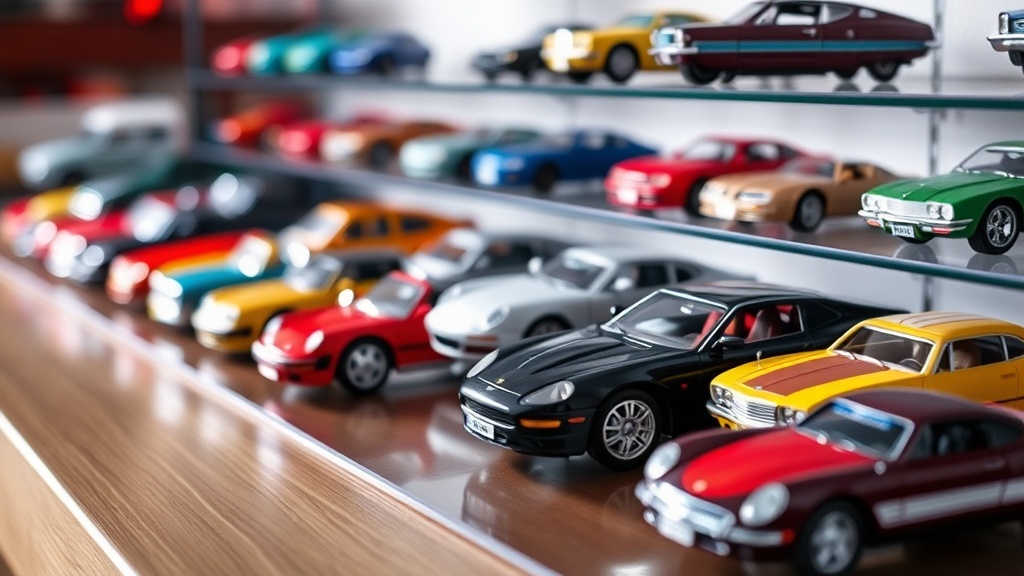
For 1:18 scale collections, I recommend individual cases per vehicle rather than multi-car displays. This eliminates contact damage and allows microclimate control. For 1:43 and smaller scales, multi-tier cases with acrylic risers maximize visibility while maintaining protection.
Custom Cabinetry: The Professional Approach
If you're housing 100+ pieces, invest in purpose-built cabinetry. Standard bookshelves fail under diecast weight—particleboard shelves sag, and the 12-inch vertical spacing wastes space for 1:43 scale while insufficient for 1:18.
Construction specifications:
- Solid wood or metal frame construction; avoid particleboard entirely
- Adjustable shelf standards (the metal strips with holes) every 32 inches horizontally
- Shelf material: 3/4-inch plywood or tempered glass with a weight rating of 25 pounds per square foot
- Integrated LED lighting with separate circuits per shelf for granular control
- Sealed backs with vapor barrier to prevent wall moisture transfer
Handling Protocols and Maintenance Schedules
The Proper Handling Technique
Every time you touch a model, you introduce skin oils, transfer microscopic abrasives, and risk dropping. Establish a handling protocol and enforce it without exception.
Handle diecast models with clean cotton gloves—not for the theatrical effect, but because your fingertips contain oils that etch paint finishes over time. Support the model at its structural points: the base on most modern pieces, or the chassis rails on older models. Never lift by protruding details—mirrors, antennas, and trim pieces are cast separately and attached with adhesives that degrade.
Before handling, wash hands with unscented soap (fragrances contain solvents). Remove rings and watches. Work over a padded surface—an unfolded towel provides sufficient cushioning. Handle one model at a time; the impulse to compare two pieces side-by-side causes 60% of handling damage I've documented.
Cleaning: Less Is More
Dust is abrasive. It contains silica particles that scratch paint when wiped. Compressed air is your primary tool—use a camera lens blower, not canned air (the propellants can damage sensitive finishes). For stubborn dust, use a soft camel hair brush, working from top to bottom in one direction.
When deeper cleaning is necessary:
- Use distilled water only—tap water contains minerals that leave residue
- Microfiber cloths designed for optical lenses; household microfiber can be too aggressive
- No cleaning solutions containing ammonia, alcohol, or petroleum distillates
- Work in sections, drying immediately with a separate cloth
- Never submerge models—water enters seam lines and evaporates slowly, causing internal corrosion
Maintenance Inspection Schedule
Implement a quarterly inspection protocol. Create a simple spreadsheet tracking:
- Date of last handling
- Visible condition notes (paint, tires, base integrity)
- Environmental readings at time of inspection
- Any corrective actions taken
This documentation serves multiple purposes: it catches deterioration early, establishes provenance for insurance purposes, and forces regular environmental monitoring.
Special Considerations for Resin and Composite Models
The rise of resin-cast limited editions has introduced new preservation challenges. Resin is hygroscopic—it absorbs moisture from the air, causing warping and paint bubbling. Resin models are also significantly heavier than diecast equivalents, requiring reinforced shelving.
Store resin models in sealed display cases with dedicated desiccant systems. Never store resin in direct contact with wood surfaces; wood off-gasses acids that react with resin catalysts. Use acrylic risers or acid-free foam blocks as barriers.
Insurance and Documentation
Your collection represents significant capital investment. Standard homeowner's policies typically cap collectibles coverage at $1,000–$2,500 with no specific itemization. Secure a specialized collectibles rider or standalone policy.
Documentation requirements for insurers:
- High-resolution photography of each piece (minimum 300 DPI, multiple angles)
- Original purchase receipts or certificates of authenticity
- Professional appraisal for pieces exceeding $500 individual value
- Inventory stored off-site or in cloud storage
- Photographic documentation of storage conditions and security measures
Update documentation annually. The 30 minutes invested saves months of disputes should you ever need to file a claim.
The Long View: Building a Legacy Collection
Proper storage and display isn't about maintaining resale value—though it certainly does—it's about respecting the engineering and craftsmanship these pieces represent. Every diecast model is a frozen moment of automotive history, captured at 1:18 or 1:43 scale with tolerances that would impress a Swiss watchmaker.
Approach your collection with the same rigor you'd apply to museum-grade artifacts. Control the environment. Handle with intention. Document thoroughly. Your future self—and whoever inherits these pieces—will appreciate the discipline you've maintained.
The models in your care will outlast you if properly preserved. That's not hyperbole; it's materials science applied with curatorial respect.
Steps
- 1
Choose the Right Display Case for Your Collection
- 2
Protect Models from UV Light and Dust Damage
- 3
Organize and Arrange Your Diecast Cars Properly