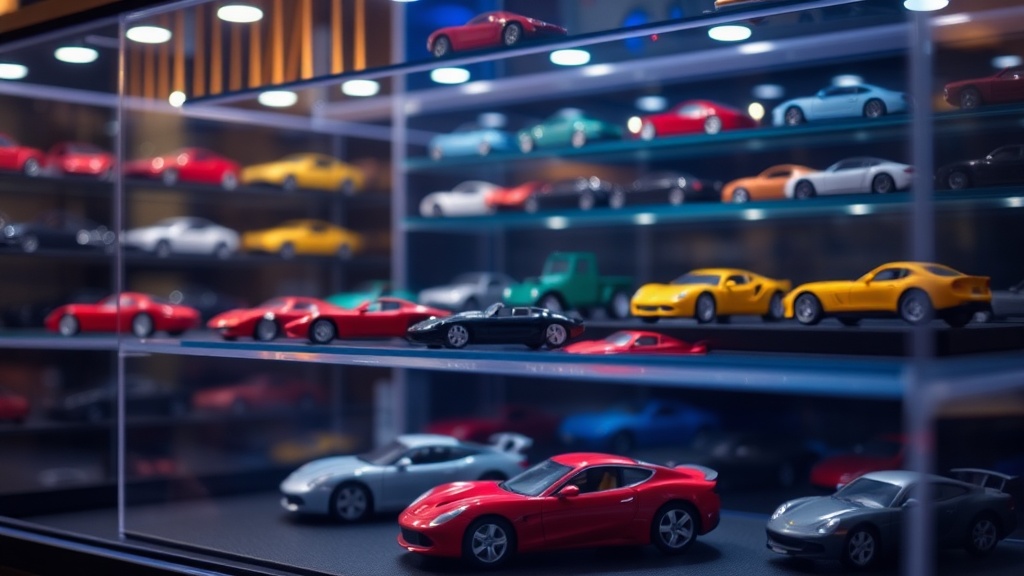
Selecting High-Quality Display Cases for Diecast Collections

You will learn how to select and maintain display cases that protect your diecast models from environmental degradation.
Selecting the right housing for a precision-scaled model isn't just about aesthetics; it's about preventing the slow decay caused by dust, UV exposure, and atmospheric moisture. Whether you're housing a single high-value resin model or a massive collection of vintage ZAM models, the enclosure serves as your first line of defense. If you choose the wrong material, you might inadvertently accelerate the degradation of your collection through chemical off-gassing or trapped humidity.
In my years on the shop floor, I learned that even the most precisely machined parts can fail if the environment isn't controlled. The same applies to your collection. A cheap plastic box might look fine on day one, but it can become a trap for trapped gases or moisture-induced oxidation. This guide examines the technical requirements for a truly protective display environment.
What materials are safest for long-term diecast storage?
The biggest mistake collectors make is assuming all clear plastics are equal. Many budget-friendly acrylic cases are actually made from low-grade polymers that can off-gas VOCs (Volatile Organic Compounds) over time. These gases can interact with the paint or even the metal itself, causing unexpected discoloration. When you're looking for high-quality housing, look for PMMA (Polymethyl Methacrylate), commonly known as high-grade acrylic. It's much more stable than standard polystyrene.
Avoid any display case that has a strong "plastic" smell right out of the box. That scent is a sign of chemical outgassing. If you're using high-end diecast models with delicate tampo-printed details, you want a material that is chemically inert. A study on material stability—often referenced in museum conservation standards—suggests that high-grade acrylic provides much better UV protection than standard polycarbonate, which can yellow and become brittle under light exposure.
| Material Type | Durability | Clarity Level | Chemical Stability |
|---|---|---|---|
| High-Grade Acrylic (PMMA) | High | Exceptional | Excellent |
| Polycarbonate | Very High | Good | Moderate |
| Standard Polystyrene | Low | Fair | Low |
How do you prevent dust and moisture buildup inside a display?
A display case is only effective if it's actually airtight, yet being too airtight can be a problem. If you seal a model inside a case with high humidity, you're essentially creating a greenhouse. This can lead to rapid oxidation of the diecast alloy. I always suggest a two-step approach: check the ambient humidity of the room first, and then consider adding a small, discreet desiccant pack if the case is a closed system.
Silica gel packets are a common solution, but you must be careful. If the case is completely sealed, the packet will eventually saturate and stop working. For long-term storage, I recommend using a display that allows for a tiny amount of air exchange, or using a humidity-controlled display case designed for professional collectors. You can find technical data on humidity levels and their effect on metal surfaces through resources like the Library of Congress preservation guidelines, which detail how environmental factors affect physical objects.
Which lighting setups are best for showcasing models?
Lighting is a double-edged sword. You want to see the fine details of the chassis and the luster of the paint, but light—especially UV light—is a destructive force. Direct sunlight is the enemy of every collector. It will fade the paint and can even cause certain types of plastic parts to become brittle and crack. If you use LED-based lighting, you're on the right track, as LEDs produce very little heat and almost no UV radiation.
When setting up your display, keep the light source away from the direct line of the model's face. If you're using an integrated light system within a case, ensure the heat sink is adequate. Excessive heat within a small, enclosed acrylic box can lead to "heat soak," which might soften the wax or paint on certain vintage models. If you want to see how light affects various materials, the Metropolitan Museum of Art's conservation resources provide excellent insights into how light and heat influence the longevity of physical artifacts.
One often overlooked aspect of display is the "footing" of the model. If you're displaying a model on a velvet or fabric base within a case, be aware that these can trap moisture and even harbor micro-particles that might scratch the bottom of the diecast. I prefer using a high-density foam or a clear acrylic stand. These provide stability without the risk of organic decay or moisture retention found in fabric-based stands.
Finally, don't forget the importance of the "cleaning access." If a case is too difficult to open or requires tools to disassemble, you'll likely skip the routine maintenance. I always recommend a design that allows for easy access to the interior. You'll need to periodically check for any signs of "zinc rot" or surface oxidation. A case that is easy to open encourages more frequent inspections, which is the best way to catch small problems before they become permanent damage.