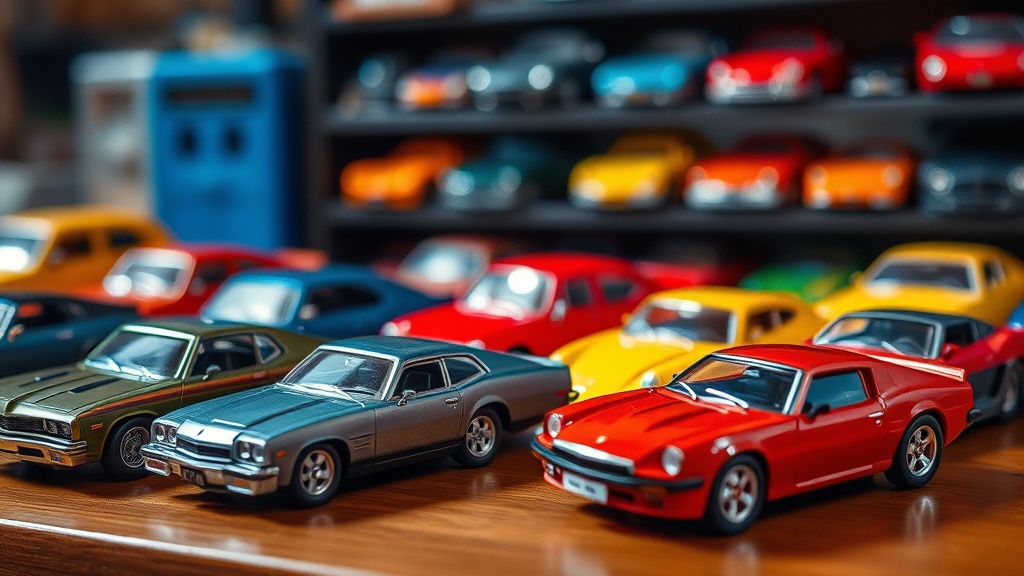
The Complete Beginner's Guide to Starting a Diecast Car Collection

Understanding Diecast Scales: The Foundation of Collecting
Diecast models are manufactured to specific scale ratios that represent their relationship to full-size vehicles. These standardized scales determine not only the physical size of models but also influence price points, detail levels, and storage requirements. The four dominant scales in the collectible market are 1:18, 1:24, 1:43, and 1:64.
The 1:18 scale remains the flagship format for serious collectors. At approximately 10 to 12 inches in length depending on the vehicle prototype, these models command prices ranging from $80 for entry-level Autoart reproductions to over $500 for limited-edition CMC hand-assembled pieces. The larger canvas allows manufacturers to replicate functional hood hinges, working suspension components, and carpeting accurate to the millimeter.
The 1:24 scale offers a middle ground, typically measuring 7 to 8 inches long. This format dominates the American market through brands like Danbury Mint and Franklin Mint, with retail prices between $40 and $200. The 1:43 scale, measuring roughly 4 inches, traces its origins to British Dinky Toys from the 1930s and remains the preferred European standard. High-end manufacturers including Minichamps and Spark produce 1:43 models priced from $50 to $300.
The 1:64 scale represents the entry point for most collectors. Mattel's Hot Wheels and Tomicas from Takara Tomy dominate this segment, with basic models retailing at $1.25 to $5.00. However, premium 1:64 offerings from Tarmac Works and Inno64 can reach $25 to $40 per unit, featuring rubber tires, diecast chassis, and photo-etched details.
Materials and Manufacturing: What Separates Quality from Casual
True diecast construction utilizes Zamak, a zinc-aluminum alloy containing approximately 4% aluminum and trace copper content. This alloy melts at 785°F (419°C) and flows into precision steel molds with tolerances of ±0.001 inches. Quality manufacturers employ pressure diecasting at 2,000 to 3,000 PSI, creating body shells with wall thicknesses between 1.5mm and 2.0mm.
Budget-oriented manufacturers often substitute plastic ABS (Acrylonitrile Butadiene Styrene) for secondary components or entire bodies. While ABS reduces production costs by 40% to 60%, the material lacks the heft and durability that define collectible-grade diecast. A genuine 1:18 diecast model typically weighs between 2.5 and 4.5 pounds, whereas plastic-heavy alternatives rarely exceed 1.5 pounds.
Photo-etched metal parts represent the gold standard for fine detailing. These components, manufactured from 0.005-inch brass or stainless steel sheets, replicate windshield wipers, grille mesh, and badge lettering. Premium brands including Almost Real and LCD Models incorporate 50 to 100 individual photo-etched pieces per model, contributing to the $300 to $800 price bracket.
Establishing Collection Parameters
Successful collections emerge from defined parameters rather than random accumulation. The three primary organizational frameworks are manufacturer-specific (Ferrari, Ford, Porsche), era-focused (1950s classics, Group B rally, 1990s JDM), or thematic (Le Mans winners, police vehicles, movie cars). Limiting scope to one or two categories prevents collection sprawl and maximizes display cohesion.
Budget allocation requires realistic assessment of acquisition costs plus ancillary expenses. A modest collection of 20 to 30 1:43 scale models requires an initial investment of $1,000 to $3,000. For 1:18 scale collectors, the same quantity demands $2,500 to $8,000. Additional costs include display cases ($50 to $300 each), acrylic dust covers ($15 to $40 per model), and climate control considerations.
Recommended Starter Categories
- JDM Sports Cars (1990-2000): Models including the Nissan Skyline R34 GT-R, Toyota Supra MK4, and Mazda RX-7 FD are widely available from Ignition Model ($180 to $280) and AUTOart ($120 to $180).
- Le Mans Prototypes: Spark produces 1:43 scale resin-cast winners from 1923 to present, averaging $75 per model with limited editions of 300 to 500 units.
- American Muscle (1964-1974): ACME and GMP specialize in 1:18 scale Detroit classics, with prices from $150 for standard releases to $400 for serialized limited editions.
Manufacturer Landscape and Specializations
The diecast industry operates through distinct tiers. Mass-market manufacturers including Maisto, Bburago, and Welly produce entry-level models priced $15 to $50, utilizing simplified tooling and plastic components. These serve as display pieces but lack investment potential and precision engineering.
Mid-tier manufacturers such as Norev, Minichamps, and Otto Mobile occupy the $80 to $200 range, offering sealed-body resin or basic diecast construction with accurate paint codes and badging. These brands suit collectors prioritizing model diversity over mechanical functionality.
Premium manufacturers including CMC, BBR Models, and Amalgam Collection represent the apex of diecast engineering. CMC's 1:18 Ferrari 250 GTO contains 1,850 individual parts, 250 of which are metal castings, and requires 300 assembly hours. Such models retail between $500 and $1,200, with production limited to 2,000 to 5,000 units globally.
Emerging Brands Worth Monitoring
- Solido: French manufacturer revived in 2018, offering 1:18 models at $60 to $90 with surprising detail levels.
- Tarmac Works: Singapore-based producer of 1:64 and 1:43 race liveries, limited to 1,000 to 2,000 pieces per variant.
- Kingston: Chinese manufacturer specializing in 1:18 classic British roadsters with opening panels and functional steering.
Sourcing and Acquisition Channels
Primary retail channels include authorized dealers, manufacturer direct sales, and specialty hobby shops. Retail pricing follows Manufacturer's Suggested Retail Price (MSRP) structures, though most releases experience 15% to 30% discounting within six months of release. Exceptions include limited editions under 1,000 units, which frequently appreciate 50% to 200% within the first year.
The secondary market operates through eBay, Facebook collector groups, and dedicated auction houses such as Bring a Trailer and RM Sotheby's Diecast Division. When purchasing pre-owned models, inspect for zinc pest (a crystalline deterioration causing surface bubbling), missing badges, and yellowed clear coats. Zinc pest appears primarily in models manufactured before 1990 or stored in high-humidity environments exceeding 60% relative humidity.
Storage, Display, and Environmental Control
Diecast models require stable environmental conditions to prevent degradation. Ideal storage maintains temperatures between 65°F and 75°F (18°C to 24°C) with relative humidity at 45% to 55%. Direct sunlight causes paint fade within 6 to 12 months of exposure and can warp plastic components. UV-filtering acrylic cases rated at 99% UV blocking provide essential protection for displayed collections.
Display shelving must support substantial weight—a collection of fifty 1:18 models weighs approximately 150 to 200 pounds. Glass display cabinets from Ikea (Detolf series, $65 to $90) accommodate 15 to 20 1:18 models per unit. For climate-controlled storage, archival-grade plastic containers with desiccant packets prevent oxidation of metal components.
Maintenance Protocols
Routine maintenance extends model longevity and preserves value. Dust accumulation should be removed using soft makeup brushes or compressed air at 30 PSI maximum. Never apply liquid cleaners directly to models—instead, dampen microfiber cloths with distilled water for stubborn residue. Rubber tires require occasional treatment with vinyl conditioner to prevent dry rot and cracking over decades.
Models with functional components (opening doors, hoods, removable wheels) benefit from periodic exercise of these mechanisms. Hinge lubrication with PTFE-based dry lubricant prevents binding. For models utilizing felt or fabric carpeting, UV exposure causes fiber degradation; rotate displayed models quarterly to ensure even aging.
Documentation and Provenance
Maintain detailed records of acquisitions including purchase dates, prices, edition numbers, and certificates of authenticity. Limited edition models from CMC, BBR, and Amalgam include numbered plaques and certificates—these documents can represent 10% to 20% of resale value. Photograph each model upon acquisition to document condition for insurance purposes.
Standard homeowner's insurance policies typically exclude collectibles or cap coverage at $1,000 to $2,500. Specialized collectibles insurance through providers like Collectibles Insurance Services or American Collectors Insurance offers agreed-value coverage starting at approximately $0.30 per $100 of insured value annually.
Evaluating Investment Potential
While diecast collecting primarily serves passion rather than profit, certain categories demonstrate appreciation trends. Limited editions under 500 units from defunct manufacturers (GMP, Ertl American Muscle) have appreciated 300% to 800% since 2010. Racing liveries associated with significant victories (Senna's 1988 McLaren, Schumacher's 2000 Ferrari) consistently outperform standard road car variants.
Acquisition decisions should prioritize personal connection to subject matter over speculative value. Markets fluctuate, but a well-curated collection of meaningful vehicles retains intrinsic worth regardless of monetary appreciation.
Beginning a diecast collection represents entry into a community spanning casual hobbyists to serious investors. By understanding scales, manufacturers, and preservation techniques, new collectors avoid common pitfalls and build collections worthy of display for decades.