
The Sealed Resin Fallacy: Why Articulation Defines Engineering

The industry keeps repeating the same line: sealed resin delivers “perfect proportions” and “premium exclusivity.” I understand the appeal to the naked eye. But under the macro lens, the thesis collapses.
If a 1:18 reference cannot reveal its internal architecture, cannot articulate its panel system, and cannot demonstrate functional mechanical intent, it is not the apex of miniature engineering. It is a static shell.
1) The Manufacturing Reality: Why Sealed Resin Scaled So Fast
Sealed resin did not become dominant because collectors demanded more engineering. It became dominant because manufacturers can reduce complexity:
- Fewer moving interfaces (hood, doors, trunk, hinges, latch systems)
- No requirement to engineer repeatable panel motion or stop geometry
- No need to package wiring, plumbing, linkages, or multi-material sub-assemblies in opening bays
In short: less tooling complexity, fewer tolerance stacks, less hand-assembly labor.
Meanwhile, the articulated die-cast benchmark remains expensive because it is mechanically difficult. CMC’s own manufacturing language is explicit: hand-mounted components and high parts counts are central to the product identity, with references ranging from hundreds to thousands of parts (CMC, example 2,877-part reference). Exoto describes the same ethos at 1:18 scale: functioning steering, working suspension, wiring/plumbing detail, and opening functions on relevant references (Exoto 1:18, Cobra Daytona page).
That is not marketing garnish. That is mechanical bill-of-materials.
2) Macro-Lens Audit: Engraved Illusions vs True Shut Lines
To the naked eye, a sealed resin body can appear clean because its shut lines are engraved and uninterrupted by moving hardware.
But under the macro lens, two realities diverge:
- Engraved resin seams are visual suggestions of panel separation.
- Articulated zinc-alloy panel systems must hold real, physical gaps under motion and repeated handling.
The second standard is brutally harder. It demands consistency in hinge position, panel edge geometry, latch tension, and cumulative tolerance management.
This is where die-cast metallurgy still matters. Zinc-alloy platforms (e.g., Zamak families) are used in precision die-casting because they fill complex cavities and maintain tight dimensional behavior in volume production (Xometry zinc die-casting overview, Zamak overview). By contrast, typical polyurethane casting resin systems used in sealed references prioritize form reproduction and finish quality, but are fundamentally lightweight polymer systems.
Smooth-On’s published data for a representative casting resin (Smooth-Cast 65D) lists specific gravity 1.05 g/cc and tensile strength 2,400 psi (Smooth-On). Compare that to commonly cited Zamak 3 density around 6.6 g/cc in engineering references (Zamak summary). Different material class, different structural behavior, different tactile and mechanical envelope.
This is why a sealed resin silhouette can look “perfect” yet feel sterile in hand: the mass distribution, edge behavior, and functional architecture are absent by design.
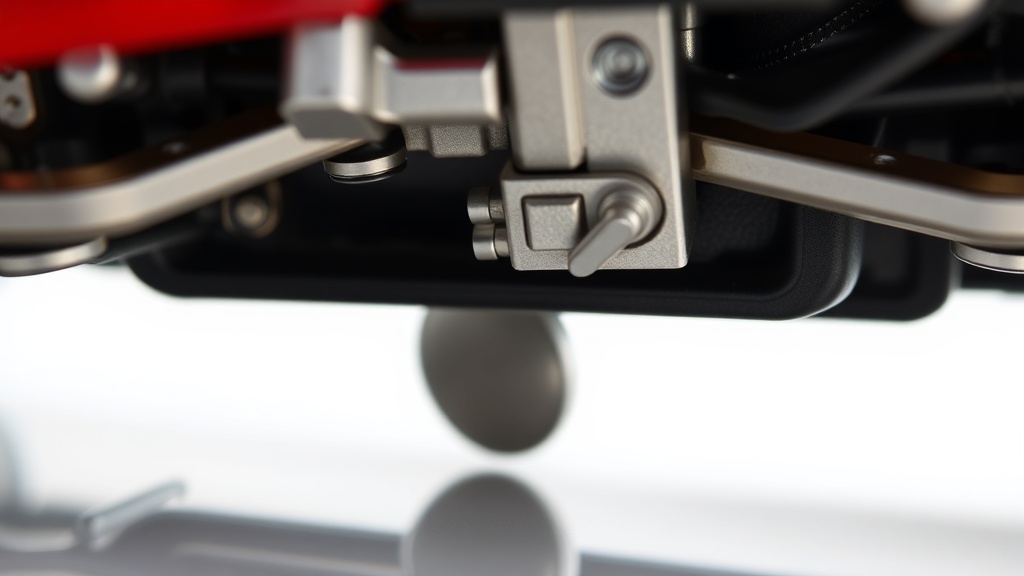
3) The Hidden Soul: Why Opening Hardware Is Non-Negotiable
A museum-grade 1:18 reference should permit inspection.
If I cannot open the hood and audit wiring routes, fuel/ignition routing logic, casting texture, and fastener fidelity, I am being asked to buy trust instead of engineering.
My baseline criteria remain unchanged:
- Wired/plumbed engine bay with coherent routing logic
- Functional or at least mechanically credible suspension representation
- Opening panels with controlled motion and tight shut lines in both open and closed states
- Undercarriage detail that survives dental-mirror inspection
Anything below this threshold is décor, not a technical artifact.
4) CMC vs Sealed Resin in the Secondary Market (Recent Snapshot)
Let us look at current market behavior, not brochure language.
Recent indexed Catawiki sold-lot snippets (late 2025 to early 2026) show articulated CMC references repeatedly clearing solid levels:
- CMC Auto Union Typ C M-034: €289 (about 8 weeks ago)
- CMC Auto Union Type D: €250 (about 8 weeks ago)
- CMC Dino 156 F1 Sharknose: €280 (about 7 weeks ago)
- CMC Bugatti T35: €285 (about 2 weeks ago)
- CMC Ferrari 250 GTO M-151: €471 (about 10 weeks ago)
(Examples surfaced via Catawiki listing pages indexed in Brave search results.)
Comparable sealed BBR resin examples in the same indexed stream show more dispersion and, in many standard references, softer clears:
- BBR Ferrari SF90 “Leclerc Maiden Win”: €200 (about 1 week ago)
- BBR Ferrari 488 Pista limited variant: €550 (about 130 weeks ago; limited-run outlier)
- Multiple recent BBR listings appear as closed/no-longer-available without prominent final-bid snippets in index previews.
This does not mean every sealed resin reference underperforms. Scarcity narratives can temporarily lift select variants. But broad durability in collector confidence still tracks with demonstrable engineering content, serviceability of provenance, and parts-count credibility.
Investment Outlook
Rating: Articulated blue-chip references remain structurally superior to sealed resin as long-horizon holdings.
My 2026 position is unchanged:
- Prioritize high-parts-count articulated references from manufacturers with established mechanical identity (CMC, top Exoto lines).
- Treat sealed resin as design-object exposure, not core portfolio steel.
- Pay premiums only when three boxes are checked: historical significance, strict edition control, and documented resale consistency.
- Preserve all provenance artifacts: original packaging, COA, factory straps, protective films, and seller traceability.
The sealed resin fallacy is simple: it sells stillness as sophistication.
Engineering is not stillness.
Engineering is motion, tolerance, and visible mechanical truth.