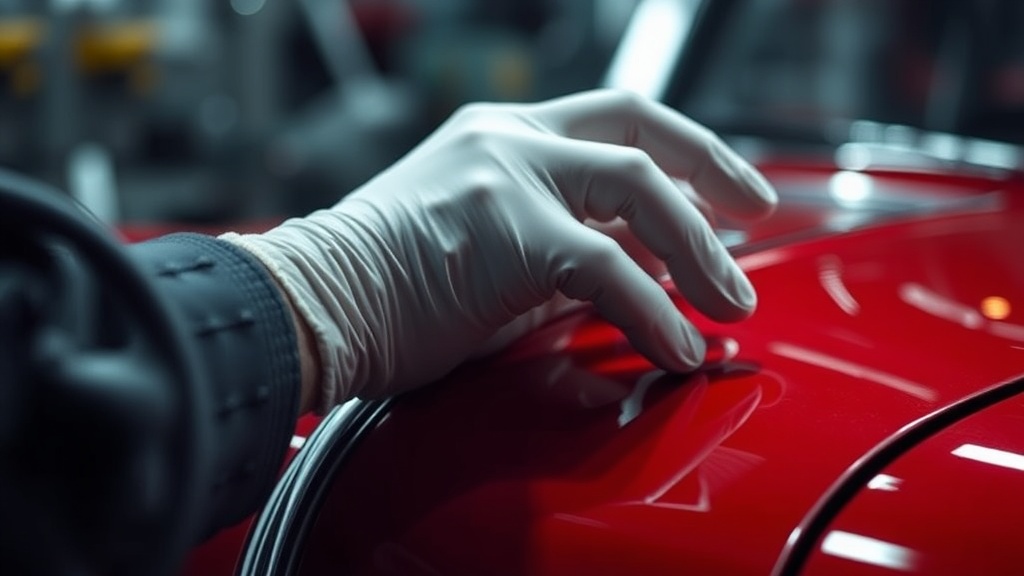
The Single Habit That Preserves Diecast Perfection: Mastering White-Glove Handling Protocol

Quick Tip
Always handle diecast models with clean, lint-free gloves to prevent irreversible surface contamination and preserve long-term value.
There is a moment—quiet, almost ceremonial—when a collector transitions from ownership to stewardship. It does not happen when you acquire a rare reference or secure a long-sought box with intact foam. It happens the first time you introduce contamination to a surface that was once pristine.
Fingerprints are not cosmetic inconveniences. They are chemical events—oils, salts, and acids interacting with enamel, clear coat, and in some cases, exposed zinc-alloy. Left unattended, they etch. They degrade. They rewrite the surface history of a piece.
The single habit that separates the casual accumulator from the curator is deceptively simple: white-glove handling, every time, without exception.

The Contamination Problem — Invisible but Measurable
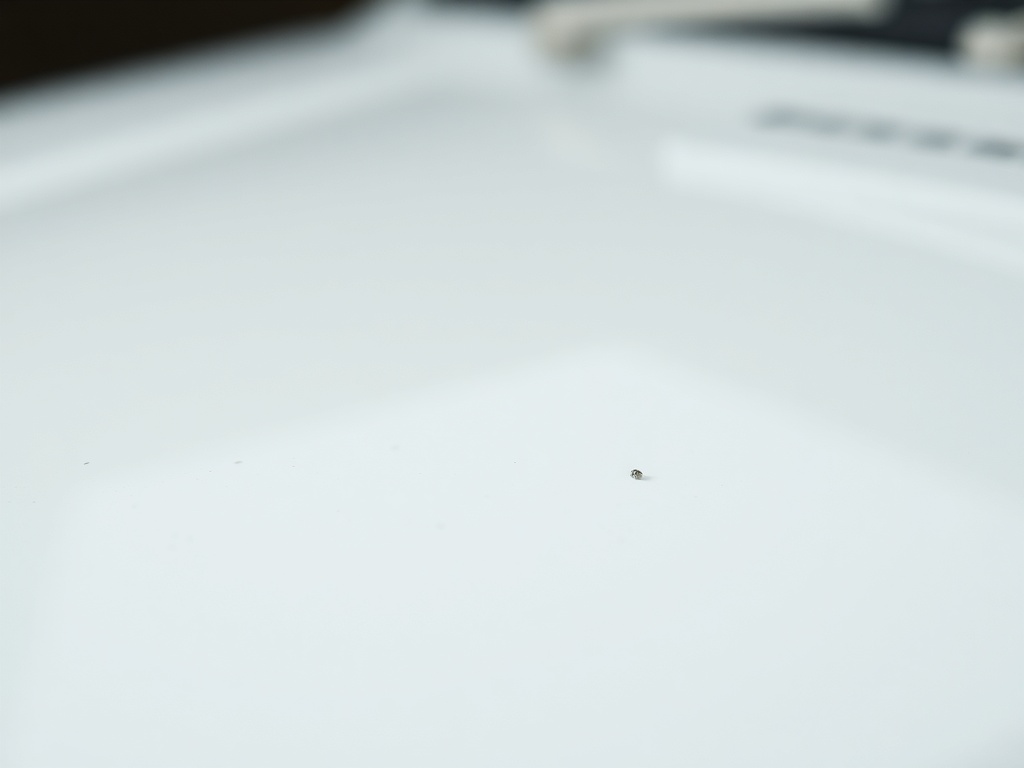
To the naked eye, a freshly handled model may appear unchanged. Under a macro lens, however, the story becomes uncomfortably clear. Skin oils distribute unevenly across painted surfaces, particularly along high-contact zones—rooflines, A-pillars, and door edges. Over time, these deposits attract particulate dust, creating micro-abrasive clusters.
This is not theoretical. It is observable. A model handled bare-handed for even a few minutes can exhibit surface dulling within weeks if stored improperly. The effect compounds in humid environments, where moisture accelerates chemical interaction.
Let’s be precise: every ungloved interaction introduces variables you cannot fully reverse.
The White-Glove Protocol — A Standard, Not a Suggestion
White lint-free gloves are not theatrical. They are a barrier system. When properly used, they eliminate direct transfer of oils and reduce static attraction of dust.
The protocol is straightforward, but execution must be disciplined:
- Material: Use lint-free cotton or microfiber gloves. Inferior fabrics shed—introducing a different contamination vector.
- Fit: Gloves must be snug. Excess material reduces tactile feedback and increases the risk of dropping a piece.
- Condition: Replace gloves regularly. A saturated glove is as problematic as a bare hand.
There are no exceptions. Not for “quick adjustments.” Not for “just a photo.” Precision is not situational.

Handling Technique — Where Most Fail
Even with gloves, improper handling can introduce risk. The objective is not simply to avoid fingerprints—it is to minimize stress on delicate components.
Let’s look at the casting on a typical 1:18 reference. The weakest points are rarely visible: mirror stems, antennae, photo-etched badges. Gripping a model by its extremities is a common failure mode.
Instead:
- Support the chassis from below using a flat palm.
- Stabilize gently at structurally reinforced points—typically the base of the A-pillar or rear quarter panel.
- Avoid contact with opening components unless necessary. Hinges, while engineered, are not designed for repetitive manipulation.
To the naked eye, a hinge may appear robust. Under magnification, you will see tolerance limits—microscopic clearances that degrade with misuse.
The Inspection Mindset — Replace Casual Interaction
Handling should always have intent. You are not “moving” a model; you are inspecting a reference.
Introduce tools into your process:
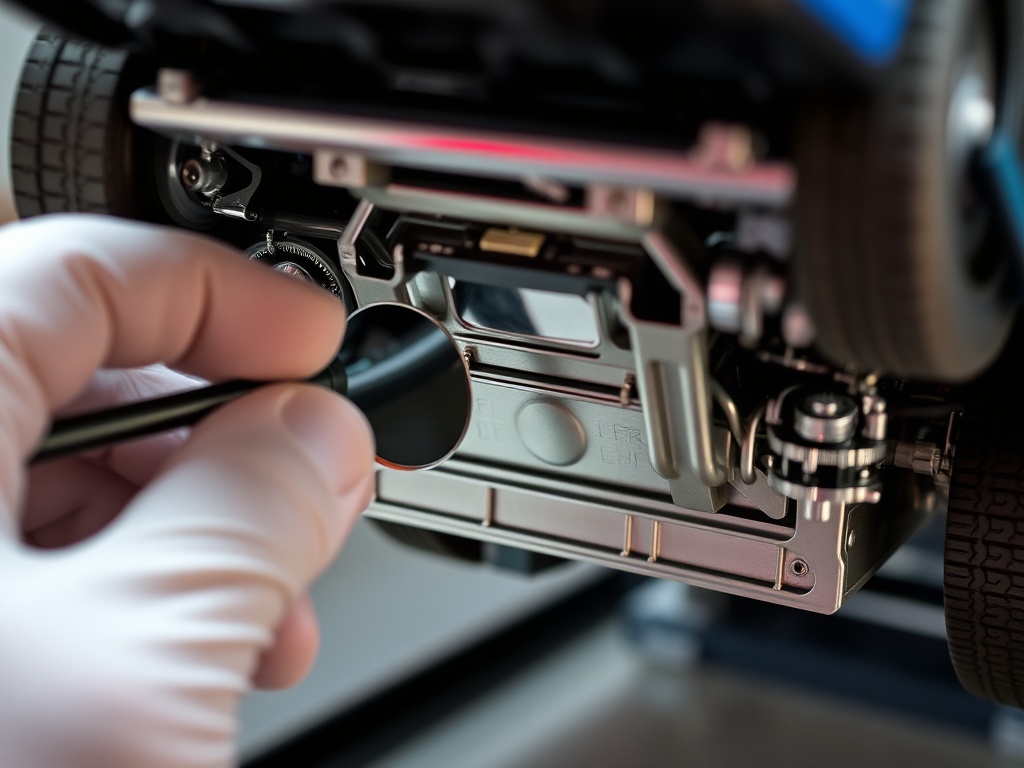
- A dental mirror for underside inspection.
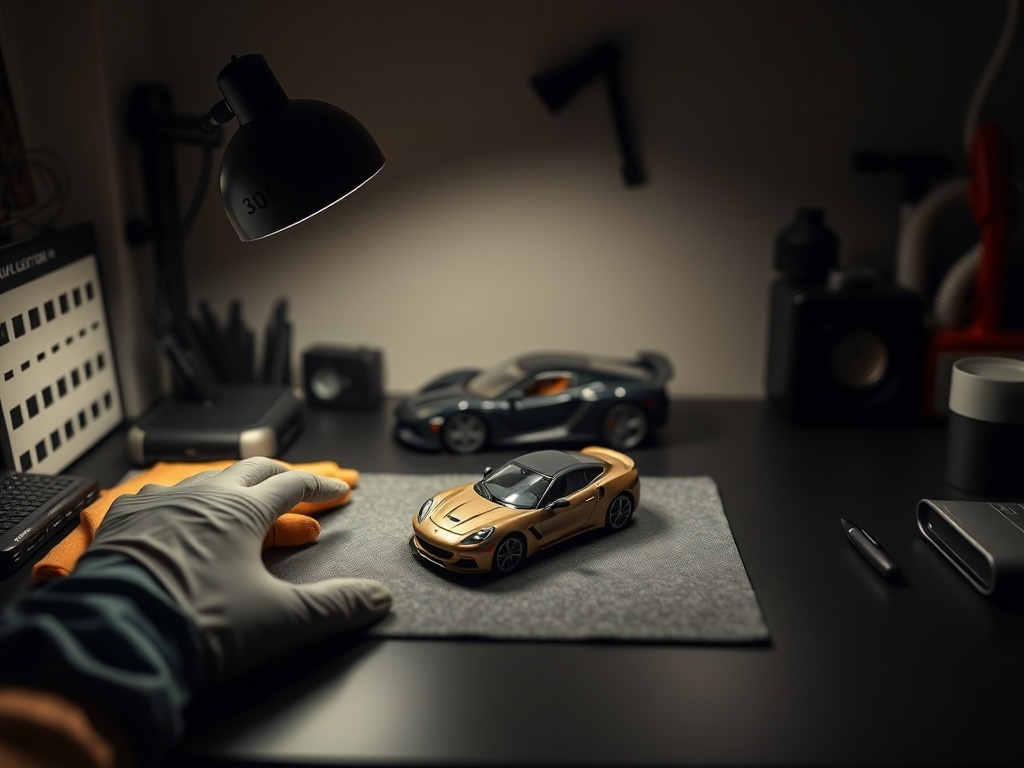
- Neutral 5000K lighting to reveal paint grain.
- A microfiber staging surface to prevent micro-scratches.
This transforms interaction from casual contact into controlled evaluation. The difference is not philosophical—it is material.
Environmental Reinforcement — Gloves Are Only One Layer
White-glove handling is the frontline defense, but it must be supported by environmental control.
- Humidity: Maintain 40–50% relative humidity to reduce oxidation risk.
- Dust Control: Sealed display cases are non-negotiable for high-value pieces.
- Air Quality: Avoid storage near kitchens or areas with airborne oils.
A pristine handling protocol cannot compensate for a compromised environment. Preservation is a system, not a single action.

The Long-Term Effect — Preservation of Surface Integrity
Collectors often underestimate the compounding effect of small habits. A single fingerprint may seem inconsequential. Multiply that by years of intermittent handling, and you begin to see irreversible surface degradation.
Conversely, disciplined white-glove handling preserves:
- Original paint clarity and depth.
- Decal adhesion and tampo print sharpness.
- Overall presentation value under display lighting.
These are not aesthetic luxuries—they are measurable contributors to long-term value.

Investment Outlook
Surface integrity is one of the first variables assessed in secondary market valuation. Collectors at the high end do not merely glance—they inspect. Under direct lighting, any contamination history becomes evident.
A reference preserved under strict white-glove protocol maintains a measurable premium over comparable pieces with visible handling wear. The difference is not anecdotal; it is consistently reflected in private sales and auction outcomes.
Adopt this habit, and you are not simply protecting a surface—you are preserving an asset class.
Final Note — Precision Is Habitual
There is no shortcut here. Either you handle with discipline, or you accept degradation as inevitable. The market will reflect your choice with clinical honesty.
White gloves are not an accessory. They are a declaration of intent.