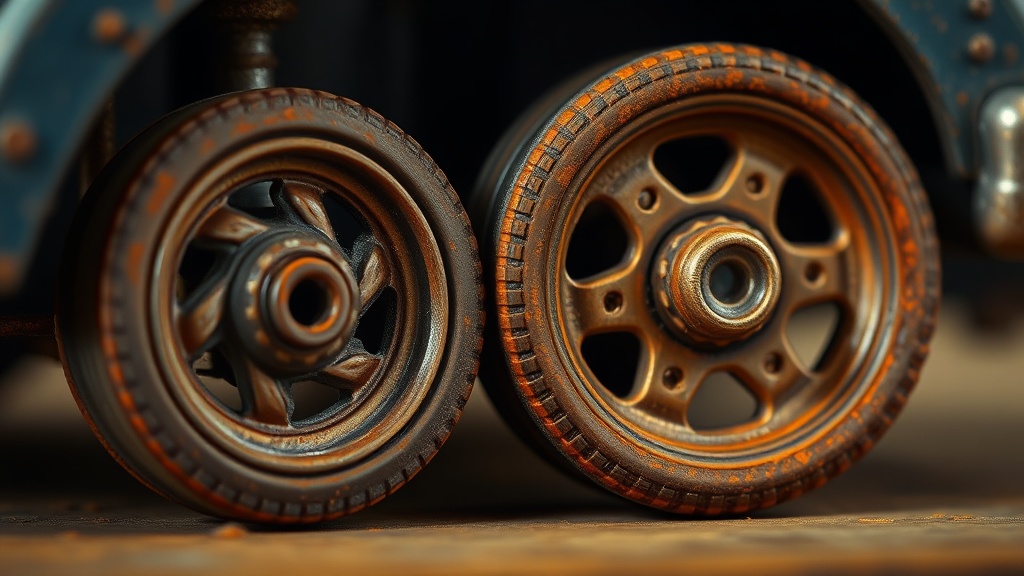
Why Your Diecast Wheels Are Turning Rusty or Discolored

A 1:18 scale diecast model sits under a high-intensity LED display light, and upon closer inspection, the once-brilliant chrome wheels exhibit a dull, brownish crust or a greenish oxidation. This degradation is not merely a cosmetic flaw; it is a chemical reaction occurring at the interface of the metal and the atmosphere. This guide examines the metallurgical and environmental causes of wheel discoloration and rust in diecast collections, providing technical solutions to arrest the decay and restore the aesthetic integrity of your models.
The Chemistry of Wheel Degradation
To understand why a wheel turns rust-colored or develops a greenish patina, you must first understand the composition of the components. Most high-end diecast models use a combination of a zinc alloy (Zamac) for the body and various plated metals for the wheels. The wheels are rarely solid steel; they are typically a base metal—often a zinc or copper alloy—coated with a thin layer of plating such as chrome, nickel, or silver. When this plating fails, the underlying metal is exposed to the environment, leading to oxidation.
The Role of Galvanic Corrosion
Galvanic corrosion occurs when two dissimilar metals are in contact in the presence of an electrolyte. In a diecast wheel, you often have a steel axle rubbing against a zinc-based wheel or a plastic hub. If moisture enters the assembly, it acts as an electrolyte, creating a microscopic battery that accelerates the corrosion of the less noble metal. This is frequently why you see "rust" appearing specifically where the wheel meets the axle or where the tire meets the rim.
Oxidation vs. Actual Rust
While collectors often use the term "rust" interchangeably, there is a technical distinction. True rust is the oxidation of iron. If your model has steel axles, the reddish-brown substance you see is iron oxide. However, if the wheels are plated brass or copper, the discoloration may be a greenish patina (verdigris) or a dark, dulling film. Identifying the specific type of oxidation is the first step in determining the correct chemical neutralizer for restoration.
Common Environmental Triggers
The environment in which you display your collection dictates the rate of chemical decay. Even if a model is kept in a display case, it is not immune to the following factors:
- Relative Humidity (RH): High humidity levels above 50% provide the water molecules necessary to facilitate electrochemical reactions. This is the primary driver for both metal oxidation and the degradation of rubber tires, which can off-gas acidic compounds that attack the wheels.
- Atmospheric Pollutants: Sulfur compounds in the air, often found in urban environments or near industrial zones, react aggressively with silver and copper-based platings, causing rapid tarnishing.
- Temperature Fluctuations: Rapid changes in temperature cause the different materials (metal, plastic, rubber) to expand and contract at different rates. This creates microscopic fissures in the plating, allowing moisture and oxygen to penetrate the core of the wheel.
- Outgassing from Plastics and Rubber: Many vintage diecast models use rubber tires that contain sulfur or plasticizers. Over time, these materials "off-gas," releasing chemicals into the micro-environment of the display case. These gases can react with the wheel plating, leading to premature discoloration.
If you notice your models are losing their luster across the entire body and not just the wheels, you may be dealing with a broader environmental issue. You can learn more about why your diecast models lose color over time to understand the systemic causes of pigment and plating failure.
Identifying the Type of Discoloration
Before applying any cleaning agent, you must perform a diagnostic check. Using a magnifying lamp or a jeweler's loupe is essential to see the scale of the damage.
Type 1: Red/Brown Oxidation (Iron Oxide)
Appearance: Rough, grainy, and reddish-brown. Usually found at the junction of the axle and the wheel.
Cause: The steel axle is oxidizing due to moisture or contact with acidic tire compounds. This is a structural concern as it can eventually seize the wheel rotation.Type 2: Dark/Black Tarnish (Silver/Nickel Oxidation)
Appearance: A thin, dark film that makes the chrome look "dirty" or "smudged."
Cause: This is common in silver-plated wheels. It is often caused by sulfur in the air or contact with human skin oils if the model was handled without gloves.Type 3: Green/Blue Patina (Copper/Brass Oxidation)
Appearance: A powdery, light green or turquoise substance.
Cause: This indicates the presence of copper in the alloy or the plating. It is highly reactive to moisture and acidic environments.Technical Restoration Procedures
Restoration is a high-risk activity. Once you strip a plating to remove oxidation, the original factory finish is gone. Proceed with extreme caution and always test a small, inconspicuous area first.
Step 1: Mechanical Cleaning
For light tarnish, avoid harsh chemicals initially. Use a high-quality, lint-free microfiber cloth. For more stubborn surface oxidation, a soft-bristled brush (such as a clean, soft toothbrush) can be used with a tiny amount of distilled water to lift debris. Avoid using tap water, as the minerals and chlorine can exacerbate the problem.
Step 2: Chemical Neutralization
If mechanical cleaning fails, you may need a specialized metal polish.
- For Chrome/Silver Tarnish: Use a very fine jeweler's rouge or a specialized metal polish like Simichrome. Apply a microscopic amount to a cotton swab. Do not rub aggressively, as this can create micro-scratches on the plating.
- For Copper/Brass Patina: A mild solution of white vinegar and water (1:1 ratio) can dissolve verdigris. Apply it briefly with a swab, then immediately neutralize the acid by rinsing with distilled water and drying thoroughly.
- For Iron Oxide (Rust): A specialized rust remover or a tiny amount of WD-40 applied to a precision tool can lift the oxide. However, be aware that petroleum-based products can damage plastic parts and rubber tires.
Step 3: Sealing the Surface
Once the metal is clean and dry, the "wound" is still open. To prevent the oxidation from returning, you must apply a barrier. A high-quality microcrystalline wax (such as Renaissance Wax) is the industry standard for museum-grade preservation. It provides a transparent, pH-neutral layer that protects the metal from oxygen and moisture without leaving a greasy residue.
Preventative Maintenance and Display Standards
The most effective way to manage wheel discoloration is to prevent it through controlled storage. As a collector, you are the curator of your own micro-climate.
Control the Humidity
If you display your models in a room with fluctuating humidity, consider using a dedicated display case with a humidity control packet (such as Silica Gel). Ensure these packets are replaced or regenerated regularly. Maintaining a consistent relative humidity of 35% to 45% is ideal for diecast metal preservation.
Avoid Direct Sunlight and Heat
UV radiation and heat accelerate chemical reactions. Sunlight can degrade the polymers in the tires, leading to the "off-gassing" mentioned earlier. Always display your collection away from direct window light and heat-producing light fixtures.
Use Protective Barriers
When handling models for photography or inspection, always use nitrile or cotton gloves. The salts and oils from your skin are highly corrosive to plated metals. If you are displaying "loose" models or parts, ensure they are not sitting in a way that allows moisture to pool in the wheel wells or around the axles.
For those who use custom display solutions, remember that using acrylic cases instead of glass can provide an extra layer of protection against dust and certain atmospheric contaminants, provided the cases are properly sealed and cleaned.
By treating your diecast models as the precision-engineered objects they are, you can mitigate the effects of time and chemistry. Monitor your collection regularly, identify the specific type of oxidation early, and prioritize prevention over restoration.