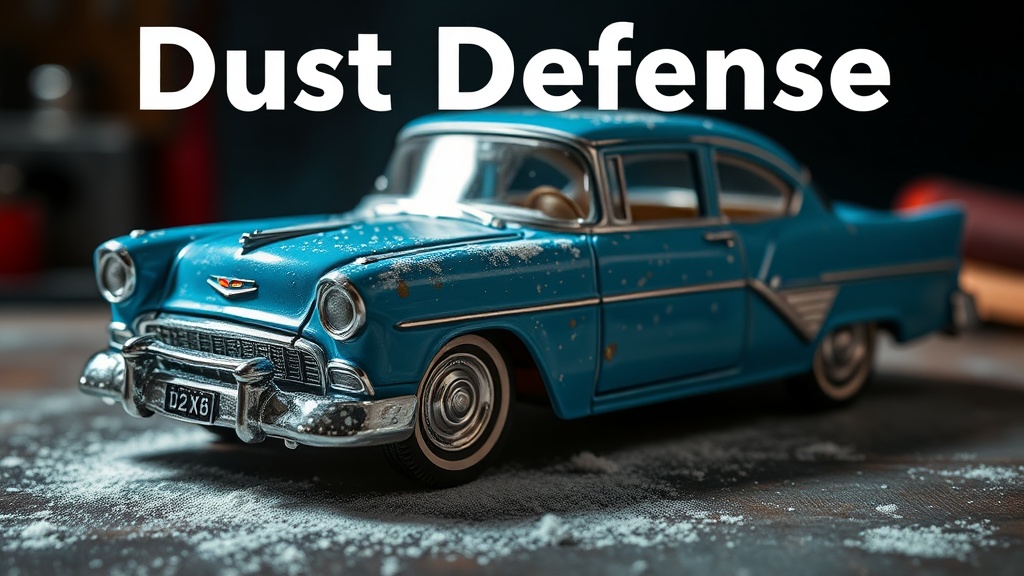
Dust Defense: Using Anti-Static Brushes to Protect Delicate Diecast Paint

Quick Tip
Always use a soft, anti-static brush instead of a cloth to prevent micro-abrasions on delicate paintwork.
A single microscopic particle of dust settles onto the hood of a 1:18 scale Ferrari F40, caught in the harsh glare of a halogen desk lamp. To the untrained eye, it is nothing. To a precision enthusiast, that particle is a liability. Over time, static electricity creates a magnetic pull that draws airborne debris into the tight shut lines and recessed door handles of your models, eventually leading to micro-abrasions when you inevitably attempt to wipe it away with a cloth.
The Physics of Static Attraction
Most collectors make the mistake of using high-pressure compressed air or standard feather dusters. Compressed air, while effective at moving debris, can drive particulates deeper into the engine bay or interior through sheer velocity. Standard dusters often generate a static charge through friction, effectively turning your cleaning tool into a magnet for more dust. To maintain the integrity of high-gloss lacquer or enamel finishes, you must neutralize the charge during the cleaning process.
The Anti-Static Toolset
The most effective tool for precision maintenance is the anti-static brush, specifically those designed for electronics or high-end camera lenses. Look for brushes with synthetic, conductive bristles that dissipate electrostatic discharge (ESD) rather than building it up.
- ESD-Safe Detail Brushes: Brands like iFixit produce specialized kits with varying stiffness. Use the softest brush for delicate paintwork and the slightly firmer versions for rubber tires and textured plastic trim.
- Anti-Static Microfiber Cloths: If you must wipe a surface, use a specialized anti-static cloth rather than a standard cotton rag to prevent the "cling" effect.
The Precision Cleaning Protocol
To ensure you do not compromise the surface tension of the paint or damage delicate parts like side mirrors or spoilers, follow this technical workflow:
- The Light Tap: Hold the brush by the handle and use extremely light, flicking motions. Do not press the bristles into the paint; you are merely "whisking" the surface.
- The Directional Sweep: Always sweep from the center of the model outward toward the edges. This prevents pushing debris into the panel gaps or door seams.
- The Detail Pass: For complex geometries, such as the grill of a vintage Matchbox or the intricate dashboard of a Precision Scale Model, use a single-hair detail brush to lift particles without applying lateral pressure.
Maintaining a pristine surface is the first step in long-term preservation. If you find that your models have already suffered from environmental wear, you may need to look into restoring oxidation and scratches on vintage diecast models to return them to their former glory.