Emerging Manufacturing Tech in 1:18 Diecast: 2026 Trends

Spring cycles are when the catalog promises start turning into bench reality. And in 2026, the real story is not paint color, not another limited plaque, not louder marketing copy. It is process control.
If you collect serious 1:18, you are now buying the output of a digital-to-physical pipeline that looks more like aerospace prototyping than old-school toy production. That is not a complaint. It is just the truth.
And truth is what preserves value.
The Mold Room Is No Longer the First Step
For decades, the traditional sequence was simple: references, physical master, toolmaker interpretation, test shots, then correction cycles. You still see traces of that in older lines where one fender shoulder is subtly wrong and the opposite side is "close enough."
That era is ending at the top end.
Amalgam publicly lays out a CAD-first workflow for modern subjects and digital scanning for classics. They also state that a 1:18 development cycle can run up to 800 hours, which tracks with what we see in serious preproduction refinement. Their Honda RA272 collaboration is even more direct: CAD built from scans of the original chassis and reviewed with Honda engineers.
That is the shift in plain English: geometry is no longer guessed by eye. It is measured.
Even outside ultra-premium boutiques, licensing agreements are tightening data flow. In September 2025, Triple Eight announced an official diecast partnership with Authentic Collectables for 2026 licensed scale products. When partnerships like that formalize, reference access and digital asset quality usually improve with them.
For collectors, this matters because panel crown, vent depth, and stance are no longer "artistically interpreted" errors we have to forgive. They are measurable misses.
DMLS Is Creeping In Through the Side Door
Let's separate hype from machine capability.
Direct Metal Laser Sintering is not replacing every zinc casting line tomorrow. It does not need to. It only needs to take over the parts where traditional tooling is slow, expensive, or geometrically compromised.
EOS process sheets for M 290 families show parameter sets down to 20 µm for some stainless configurations, and 40/80 µm strategies for steels like 42CrMo4. That matters because it enables a Skin/Core tradeoff: faster build mass where nobody sees it, finer surfaces where your loupe does.
In collector terms, DMLS is strongest right now for:
- Micro-mechanical assemblies
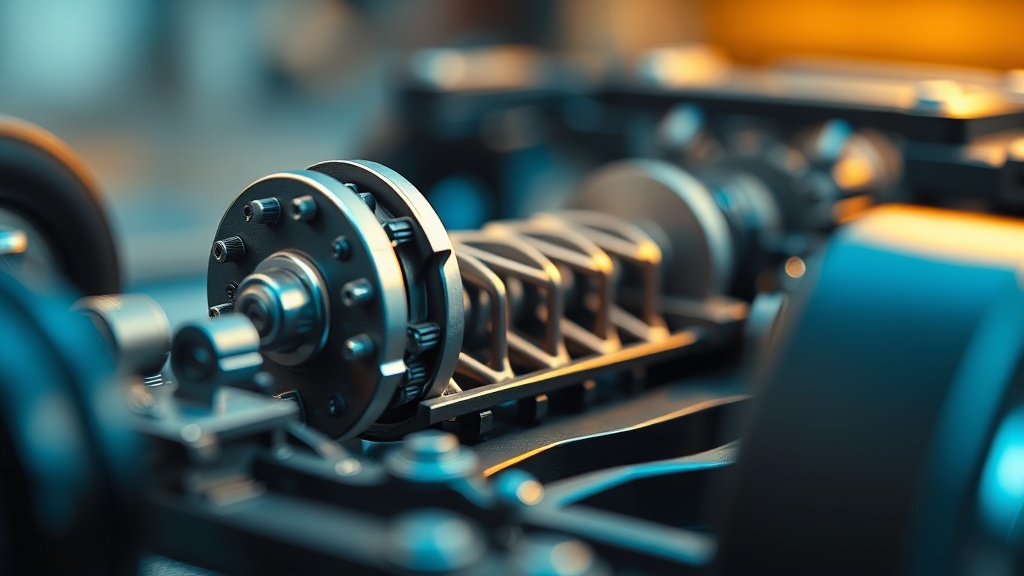
- Brake hats, caliper architecture, and lattice-like internals
- Low-volume premium runs where tooling amortization kills conventional methods
What I expect in 2026 and 2027 is hybridization, not revolution: cast main structures, laser-sintered specialty components, and CNC cleanup where tolerance stack actually impacts articulation or fit.
If you're waiting for full-DMLS 1:18 chassis at scale price points, wait longer. If you're watching for DMLS in premium subassemblies, that is already the right bet.
UV Printing Is Closing the Gap, But Tampo Is Not Dead
Collectors who still think livery detail is just "decal quality" are behind the curve.
On the UV side, Mimaki has long documented 1,200 x 2,400 dpi capability on its UJF platform, explicitly positioning it for fine lettering and line fidelity. That level of addressability is exactly why we are now seeing tighter micro-sponsor legibility on some premium pieces.
But tampo is not some relic. TAMPOPRINT still frames pad printing around very fine image quality, multicolor workflows, and durability on complex surfaces. That aligns with real bench experience: curved geometry and edge transition zones can still favor tampo execution when the pad geometry and cliché prep are done correctly.
My take for 2026: UV will keep winning where micro-detail density and repeatability dominate, while tampo keeps a defensible edge on irregular surfaces and certain durable production workflows.
Collectors should stop asking "which is better" and start asking "which method was used where, and why?"
The Soul Question: Is Digital Perfection Too Perfect?
This is the argument that splits the room.
One side says sub-micron scanning and CAD-locked geometry finally deliver objective correctness. I agree.
The other side says hand-tooled imperfection carried maker character. I also agree.
Both can be true.
A flawless scan does not automatically create a soulful model. It only guarantees faithful geometry. Soul still comes from judgment: material choice, assembly discipline, how shut lines are tuned, how mechanical feel is weighted, how finishes age after five summers in a display room.
In other words, software can remove error. It cannot replace taste.
What I'm Watching This Spring 2026
If you want to read diecast tech trends 2026 like an engineer, track these three signals:
- Brand disclosures about CAD source and scan provenance.
- Evidence of hybrid metal manufacturing in premium components.
- Print-process transparency on microscopic livery zones.
That is where the next value tier in 1:18 diecast manufacturing will be built.
Not in louder boxes. In tighter tolerances.
You Might Also Enjoy
- 1:18 Diecast Preorders in 2026: What I'm Watching Now
- The Sealed Resin Fallacy: Why Articulation Defines Engineering
- Original Box & COA Premiums in 1:18 Diecast Values Market
Sources referenced:
- Amalgam Collection development and model process pages: https://www.amalgamcollection.com/collections/in-development and https://www.amalgamcollection.com/pages/model-status
- Amalgam x Honda RA272 release details: https://www.amalgamcollection.com/products/honda-ra272-mexican-grand-prix-1965
- Triple Eight x Authentic Collectables 2026 partnership report (Sep 19, 2025): https://speedcafe.com/supercars-news-2025-triple-eight-race-engineering-signs-authentic-collectables-deal-2026-details/
- EOS M 290 and 42CrMo4 process data sheets: https://www.eos.info/metal-solutions/metal-printers/eos-m-290 and https://www.eos.info/metal-solutions/data-sheets/other-steels/pds-eos-steel-42crmo4-m-290-40-80um
- Mimaki UJF-605CII specs: https://mimaki.com/product/inkjet/i-flat/ujf-605cII/
- TAMPOPRINT pad printing technology overview: https://www.tampoprint.com/en-en/pad-printing-technology/