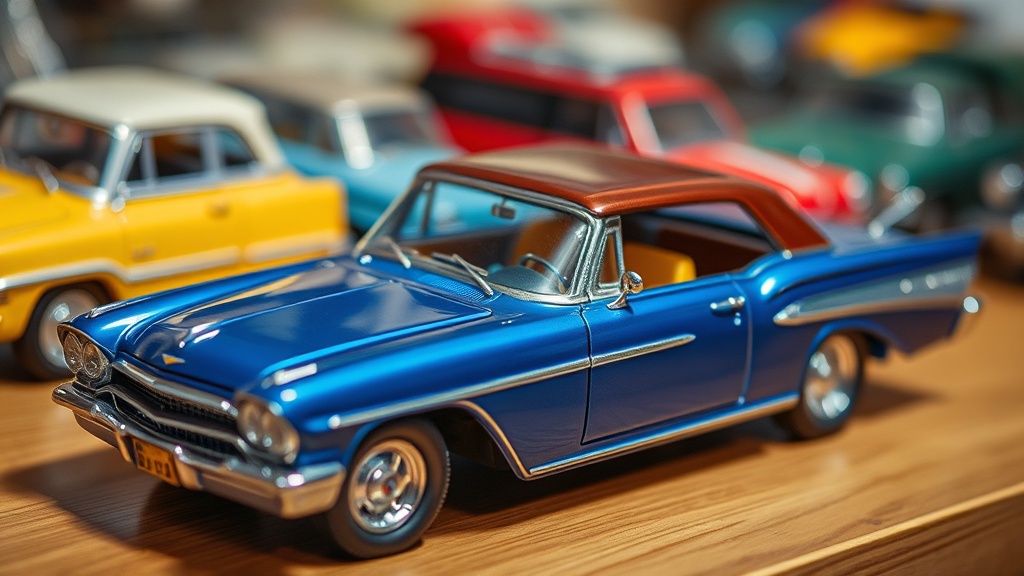
Finding High Quality Diecast Models at Estate Sales

A dusty cardboard box sits on a folding table in a dim garage, filled with a tangled mess of plastic and metal. To the untrained eye, it looks like junk. To a collector, that box might hold a mint-condition 1:18 scale Autoart or a rare Matchbox Superfast. This guide covers how to identify high-quality diecast models at estate sales, how to spot hidden gems amidst the clutter, and how to avoid the common pitfalls of buying second-hand collectibles. Understanding the technical nuances of manufacturing—from paint thickness to casting weight—is the difference between a wasted trip and a museum-grade find.
Estate sales are high-stakes environments. You aren't shopping in a controlled retail setting with bright lights and organized aisles. You're often working with limited time, often in someone's former living room or basement. You need a systematic approach to identify high-fidelity models before someone else grabs them.
What Should You Look for in High-Quality Diecast?
High-quality diecast models are defined by their material density, paint finish, and the precision of their fine details. When you pick up a model, the first thing you'll notice is the weight. A cheap toy feels hollow and light; a high-end scale model—think brands like Minichamps or Exoto—has a significant heft due to the zinc alloy (often called Zamak) used in the casting process.
Look closely at the shut lines. In the world of precision manufacturing, the gap between the car door and the body is a tell-tale sign of quality. On a high-end model, these gaps are tight and uniform. If the door looks like it was hacked out with a dull chisel, put it back. You want to see clean, consistent tolerances.
Check the paint. High-quality models use automotive-grade lacquer or specialized coatings that sit flat on the surface. If you see "orange peel" texture or bubbling, the paint job is subpar. This could be a sign of poor manufacturing or, more likely, a reaction to environmental damage. If you notice the paint looks uneven, you might want to read up on why diecast paint peels or bubbles to see if the damage is permanent.
The details are where the real engineering shines. Look for:
- Engine Detail: Is it a flat plastic slab, or can you see individual spark plug wires and textured manifolds?
- Interior Texture: High-end models feature realistic dashboard molding and even "flocked" carpets.
- Wheel Realism: Check if the tires are actually rubber or just hard, shiny plastic. Real rubber provides a much better scale look.
- Undercarriage: If the model has an open chassis, look for a detailed exhaust system rather than a single molded pipe.
How Can You Identify Authentic Collectible Brands?
You can identify authentic collectible brands by looking for specific manufacturer hallmarks, consistent scale proportions, and high-quality packaging. Most serious collectors don't just look for a name; they look for the level of craftsmanship associated with that name.
At an estate sale, you won't always have a price guide or a smartphone with a signal. You have to rely on your eyes and a few key indicators. Many premium brands, such as BBR or CMC, are extremely expensive and often come in highly specialized display cases. If you see a model sitting in a heavy, acrylic display box, treat it with extra care. These are not toys; they are precision-engineered replicas.
The catch? Some high-end brands use much more realistic materials that can be mistaken for "broken" parts if you aren't careful. For example, a highly detailed suspension component might look fragile because it actually is. Use a gentle touch. If you see a model with a "resin" body rather than diecast metal, you've likely found a high-end boutique piece. Resin models are often more expensive and are prized for their incredibly smooth surfaces and lack of mold lines.
Here is a quick reference for what to expect from different "tiers" of diecast:
| Tier | Typical Brands | Primary Materials | Key Feature |
|---|---|---|---|
| Entry Level | Hot Wheels, Matchbox | Zinc Alloy / Plastic | Playability/Durability |
| Mid-Range | Maisto, Burago | Zinc Alloy / Plastic | Display Value |
| Premium | Autoart, Minichamps | Diecast / Rubber | High Detail/Scale Accuracy |
| High-End/Museum | CMC, BBR, Exoto | Metal / Resin / Leather | Hyper-Realism |
Don't be fooled by shiny packaging. A lot of modern "collectible" lines are designed to look premium but are actually mass-produced toys. Always look past the box. If the box is damaged, it might be a sign of poor storage. You can learn more about the long-term effects of storage by checking out this guide on why model packaging yellows over time.
What Are the Red Flags to Watch For?
The biggest red flag is "shelf wear" or environmental degradation. Because many estate sale items have been sitting in attics or basements for years, they may have suffered from moisture or heat. This is particularly common with the cardboard and plastic components.
Watch out for these specific issues:
- Paint Bubbling: This is often a sign of oxidation or a reaction to humidity. If the paint is lifting, the model is likely a "project" car, not a display piece.
- Loose Components: Gently shake the model (very lightly!). If parts rattle inside, a mounting screw or a structural component has broken.
- Sun Bleaching: If the colors look faded or "chalky," the model was likely kept in direct sunlight. This is often irreversible.
- Cracked Plastic: Check the windows and the base. UV exposure makes plastic brittle. If the window looks cloudy or has micro-cracks, it's a sign of age and light damage.
One thing to remember: a "mint in box" (MIB) designation is only as good as the person who wrote it. In an estate sale setting, the person pricing the items is often a family member or a professional liquidator, not a diecast expert. They might see a perfectly fine box and call it "mint," but if you look closer, the corners might be crushed or the plastic window might be warped. Always inspect the structural integrity of the packaging. If the box is losing its shape, the model inside might have been subjected to heavy pressure or heat.
That said, don't be too afraid of "loose" models. A high-quality model that is out of its box is often a much better buy than a low-quality model that is still in its original packaging. A loose, high-end 1:18 scale model with a few minor scratches is still a masterpiece of engineering. A brand-new, cheap toy in a pristine box is still just a toy.
When you find something that looks promising, take a moment. Look at the underside. Look at the wheels. Is the steering functional? Does the suspension have a slight, realistic bounce, or is it a rigid, unyielding block? These small details tell you exactly what kind of manufacturing standards were applied to the piece. If you're unsure about how to handle a find, remember that proper care starts the moment you bring it home. Even a small mistake in cleaning can ruin a finish—so be careful with your first steps in maintenance.