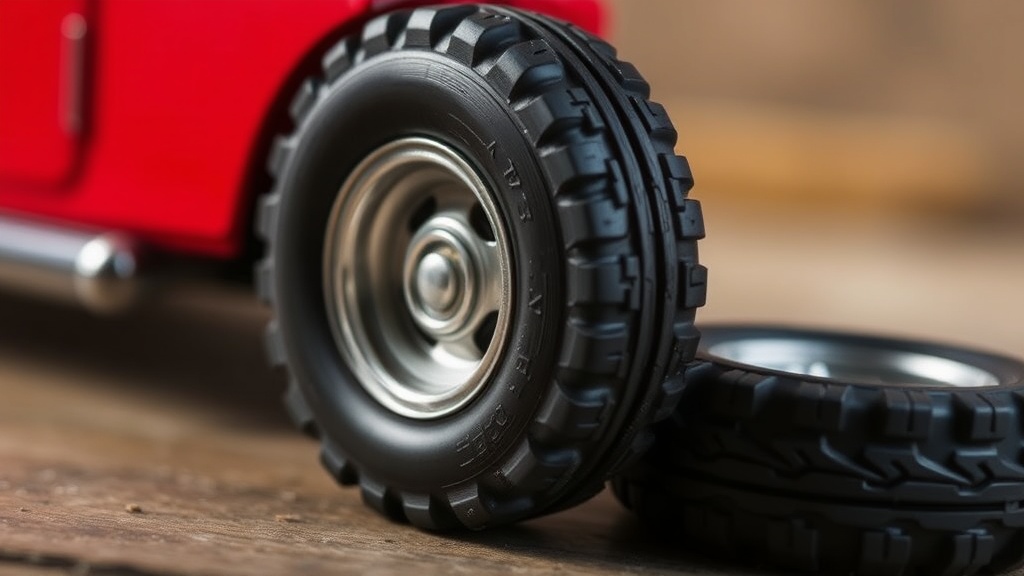
Preventing Rubber Deformity in Your Vintage Diecast Tires

Quick Tip
Store your models upright or on soft surfaces to prevent permanent tire deformation.
You pull a vintage 1:18 scale model from your shelf, only to find the rubber tires have developed "flat spots" from sitting in the same position for years. This isn't just a cosmetic flaw; it's a structural failure caused by gravity and material fatigue. If you own high-end models from brands like Autoart or Minichamps, you're likely dealing with real rubber or soft TPE (thermoplastic elastomer) compounds that are prone to deformation under constant load.
How Do You Prevent Tire Flat Spots?
The most effective way to prevent tire deformity is to rotate your models or change their weight distribution periodically. Constant pressure on a single point of the tire causes the polymer chains to settle—a process known in engineering as "creep."
To keep your collection in showroom condition, follow these storage protocols:
- Avoid direct sunlight: UV rays break down polymer bonds and accelerate rubber degradation.
- Control the temperature: High heat softens the rubber, making it even more susceptible to gravity-induced flattening.
- Use display stands: If a model is particularly heavy, use a small jack or a custom support to take the weight off the wheels.
I've found that even a slight tilt in a display case can help. If you've already invested in building a custom acrylic display case, ensure your models aren't sitting on uneven surfaces that put lateral stress on the axles.
Why Do Diecast Tires Deform Over Time?
Tire deformation happens because of the interaction between gravity and the chemical composition of the rubber. Over time, the weight of the diecast metal chassis (which can be surprisingly heavy) presses down on the soft tire, causing the material to lose its shape. This is a common issue with thermoplastic elastomers used in modern collectibles.
Here is a quick breakdown of common materials found in premium models:
| Material Type | Durability | Risk of Deformation |
|---|---|---|
| Real Rubber | High | Moderate (Hardens over time) |
| TPE (Plastic/Rubber Blend) | Medium | High (Very sensitive to heat) |
| Hard Plastic | Very High | Very Low |
How Do You Fix a Flattened Tire?
Correcting a flat spot is difficult because you're essentially trying to reverse a physical change in the material. You can sometimes mitigate the issue by using a controlled, low-heat application—think of it like a "heat set" process—but you must be incredibly careful. Too much heat and you'll melt the sidewall or damage the paint job.
If you're working with high-end pieces, I'd suggest a more cautious approach. Sometimes, the best fix is simply rotating the wheels or moving the car to a more stable, temperature-controlled environment. Remember, a little bit of vigilance goes a long way in preserving that factory-fresh look.