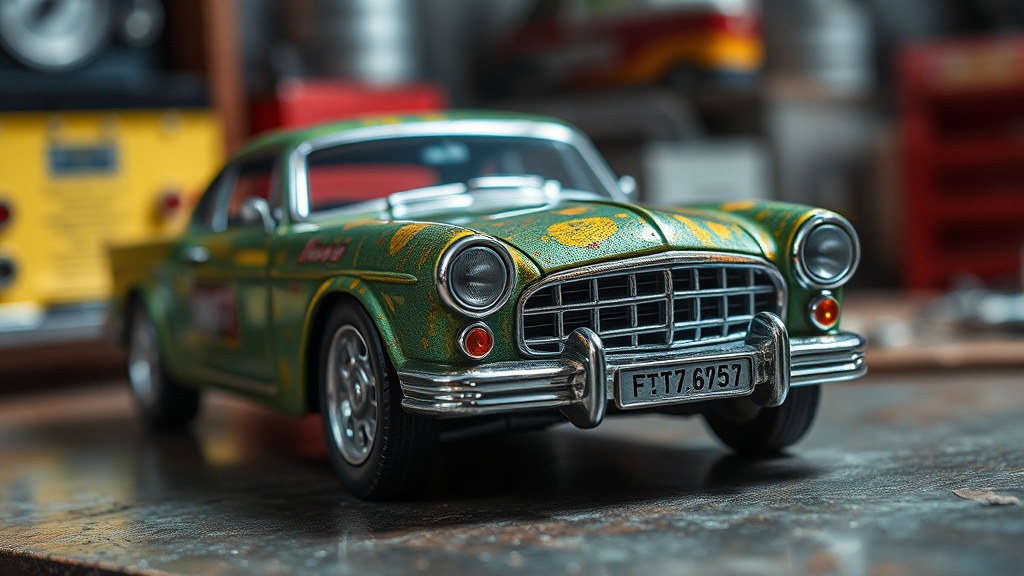
Why You Should Check Your Diecast Models for Zinc Pest

Have you ever noticed a small, inexplicable crack appearing on the fender of a highly detailed 1:18 scale model?
If you have seen a model car that appears to be "cracking" or crumbling despite being kept in a controlled environment, you are likely witnessing a metallurgical phenomenon known as zinc pest, also technically referred to as intercrystalline corrosion. This guide explains exactly what this process is, how to identify the early warning signs in your collection, and what technical steps you can take to mitigate its spread. Understanding the chemistry behind your diecast models is essential for any serious collector who wants to preserve the structural integrity and long-term value of their investment.
What is Zinc Pest?
At its core, zinc pest is not a biological fungus or a surface-level paint issue; it is a structural failure caused by impurities within the metal alloy itself. Most diecast models are made from Zamak, a family of alloys consisting primarily of zinc, with small amounts of aluminum, magnesium, and copper. While Zamak is an excellent material for high-speed die-casting due to its low melting point and fluidity, it is highly sensitive to chemical purity.
The "pest" occurs when the alloy contains excessive amounts of impurities, most notably cadmium, tin, or lead. These impurities create internal stresses within the crystalline structure of the metal. Over time, these stresses manifest as microscopic cracks that propagate through the grain boundaries of the alloy. To the untrained eye, it looks like the metal is simply breaking, but to a precision engineer, it is a clear sign of metallurgical instability. Once the internal lattice of the zinc begins to fail, the structural integrity of the component is compromised, often leading to total fragmentation.
Identifying the Symptoms of Intercrystalline Corrosion
Detecting zinc pest early can mean the difference between a minor cosmetic fix and the total loss of a rare model. Because the degradation begins at a microscopic level, you must look for specific physical indicators during your routine inspections. Use a high-powered jeweler's loupe or a macro lens to examine your models under bright, neutral light.
- Surface Cracking: Look for fine, hair-like fissures that do not follow the natural lines of the car's bodywork. Unlike a paint chip or a scratch, these cracks often appear to originate from within the metal itself, often appearing at high-stress points like door seams, pillar bases, or wheel arches.
- Bulging or Warping: In advanced stages, the internal pressure from the expanding crystalline structure can cause the metal to bulge or warp. If a door that used to sit flush with the chassis now appears slightly bowed, inspect the edges for microscopic fractures.
- Surface Bubbling: Sometimes, the metal expands slightly before it cracks, causing the paint or the thin layer of electroplated chrome to bubble or flake off in small, irregular patches.
- Unexpected Fragmentation: The most catastrophic sign is when a small piece—such as a side mirror, a spoiler, or a door handle—simply snaps off during minimal handling or even while sitting stationary on a display shelf.
It is important to distinguish this from other common aging issues. For instance, if you notice discoloration or fading, you should consult our guide on why your diecast models lose color over time, as UV degradation is a surface-level chemical reaction, whereas zinc pest is a deep-seated structural failure.
The Role of Manufacturing Quality and History
The prevalence of zinc pest is often tied to the era in which the model was produced and the manufacturing standards of the brand. During the mid-20th century, many toy manufacturers prioritized low production costs over metallurgical purity. This resulted in a higher concentration of "tramp elements" (impurities) in the zinc alloys used for die-casting.
High-end, modern collectors' brands—such as AutoArt, Minichamps, or CMC—typically maintain much tighter tolerances regarding alloy purity. However, even premium brands are not entirely immune if a specific batch of raw material was contaminated. You are more likely to encounter zinc pest in vintage Matchbox or older Hot Wheels models, as well as certain unbranded "promotional" models produced in large quantities with lower-grade materials. If you are collecting vintage diecast, a regular "stress test" of the model's structural points is a necessary part of your curation process.
Environmental Factors and the Acceleration of Decay
While zinc pest is primarily an internal metallurgical issue, external environmental factors can act as catalysts that accelerate the rate of corrosion. The chemical reaction within the metal is often exacerbated by fluctuations in the environment.
- Humidity: High moisture content in the air can facilitate the electrochemical reactions that drive intercrystalline corrosion. If you store your collection in a basement or an unconditioned room, you are significantly increasing the risk of accelerated decay.
- Temperature Fluctuations: Rapid changes in temperature cause the metal to expand and contract. For an alloy that is already struggling with internal stresses, these thermal cycles act like a hammer, forcing the microscopic cracks to widen and propagate.
- Chemical Exposure: Contact with certain oils, cleaning agents, or even heavy oxidation from nearby metals can introduce additional chemical stress to the surface of the diecast.
To ensure the longevity of your display, maintain a stable, climate-controlled environment. While you should avoid direct sunlight for your diecast models to prevent paint fade, you must also ensure that your display case is not subject to extreme heat or high humidity levels.
Can Zinc Pest Be Prevented or Cured?
The hard truth from a technical standpoint is that zinc pest cannot be "cured." Once the crystalline structure of the zinc has been compromised by impurities and the subsequent cracking has begun, the damage is irreversible. You cannot "heal" the metal. However, you can take proactive steps to prevent it from occurring in your collection and to slow its progression in models that are already showing early signs.
1. Rigorous Inspection Protocols
The best defense is a systematic inspection. Every six months, perform a visual audit of your collection. Use a bright LED light source and a magnifying glass to scan the high-stress areas of your most valuable pieces. By catching a "micro-crack" early, you can identify which models are at risk and move them to a more strictly controlled environment.
2. Environmental Stabilization
Invest in a high-quality display case that is airtight or at least highly resistant to humidity. Using silica gel packets within your display cabinets can help maintain a low-humidity environment, which is critical for preventing the electrochemical processes that drive the corrosion. A stable temperature is just as important; avoid placing displays near radiators, air conditioning vents, or exterior walls that fluctuate in temperature.
3. Minimize Physical Manipulation
If you have a model that shows the earliest signs of surface bubbling or fine cracks, handle it as little as possible. Every time you pick up a model, you are applying mechanical stress to the chassis. In a model with compromised grain boundaries, even a gentle grip can provide the kinetic energy needed to propagate a crack through the bodywork.
4. Segregation of At-Risk Models
If you identify a model that is clearly undergoing zinc pest, do not keep it in your primary display with your pristine pieces. While zinc pest is not "contagious" in the biological sense, it is a sign of poor material quality. If you have a large collection of vintage, low-grade diecast, it is wise to keep them in separate, humidity-controlled containers to ensure that the environmental conditions required for their decay do not affect your higher-end, modern-era models.
Summary Checklist for Collectors
To keep your collection in museum-grade condition, follow this technical checklist:
- Audit: Use a 10x jeweler's loupe to check seams and fenders for micro-fissures.
- Environment: Maintain a constant temperature (ideally 65-72°F) and low humidity (below 45%).
- Storage: Use airtight acrylic or glass display cases to shield against atmospheric contaminants.
- Handling: Use archival-grade gloves when moving models to prevent skin oils from interacting with the surface.
By treating your diecast models not just as toys, but as complex engineered objects, you can better understand and mitigate the chemical and physical realities of long-term preservation. Zinc pest is a formidable opponent, but with technical vigilance, you can protect the integrity of your archive.