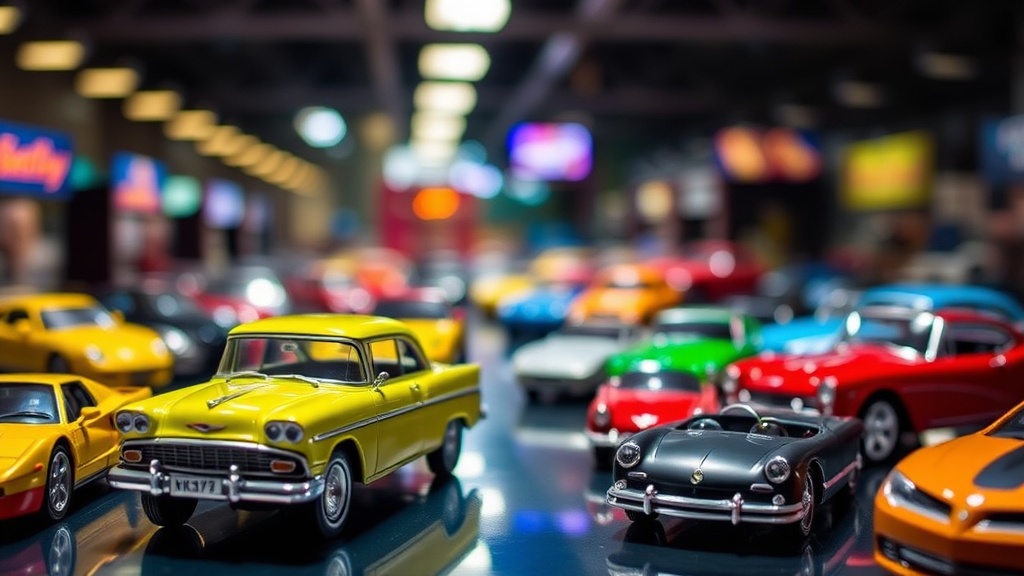
6 Rare Diecast Brands to Watch for at Toy Fairs

The Precision Scale Specialists
Limited Run Heritage Brands
Boutique Resin and Diecast Hybrids
The Customization-Focused Makers
Niche Era-Specific Manufacturers
Small Batch Artisan Studios
Are you tired of spending your time at international toy fairs browsing through mass-market brands that offer nothing but superficial aesthetics and thin diecast shells? Navigating a crowded exhibition floor like the Nuremberg Toy Fair or the Tokyo Toy Show requires more than just a keen eye; it requires a strategic understanding of which manufacturers are pushing the boundaries of metallurgical precision and component fidelity. This guide identifies six rare or boutique diecast brands that prioritize engineering excellence over volume production, ensuring your time and investment at upcoming trade shows are spent on pieces that hold long-term value.
1. Autoart (Signature and Collector Series)
While Autoart is a recognized name in the high-end collector market, many enthusiasts overlook the distinction between their standard production lines and their highly specialized, limited-run series. When scouting for these at trade fairs, look specifically for the "Signature" designation. These models are not merely scaled replicas; they are studies in mechanical accuracy. The level of detail in the undercarriage, the weight of the diecast chassis, and the precision of the door hinge tolerances set them apart from standard hobby-grade models.
A hallmark of a high-quality Autoart piece is the integration of multi-material components. You will notice a distinct difference in the tactile feedback of the steering mechanisms and the way the light interacts with the high-gloss paint finishes compared to cheaper alternatives. If you are inspecting a model under a jeweler's loupe, pay close attention to the panel gaps. In a premium Autoart model, these gaps are uniform and tight, mimicking the actual shut lines of a real automotive body. This level of precision is what separates a display piece from a mere toy.
2. Minichamps (Special Editions)
Minichamps has long been a staple in the racing and motorsport collector communities, but their true value lies in their highly specialized, limited-edition releases. These are often found in dedicated collector booths at major European trade shows. Unlike standard retail releases, these models often feature advanced suspension systems and highly detailed engine bays that feature individual wiring and plumbing components.
When evaluating a Minichamps model, check the fidelity of the decals and the complexity of the cockpit. High-end motorsport models should feature legible dashboard instrumentation and realistic seat textures. Because these models are often subject to long-term display, you should also be aware of environmental factors. If you purchase a vintage or highly sought-after Minichamps piece, ensure you understand how to prevent packaging discoloration to maintain the secondary market value of the item.
3. Kyosho (Limited Production Lines)
Kyosho occupies a unique space in the diecast world, often bridging the gap between static scale models and high-end RC (remote control) engineering. At toy fairs, look for their highly limited production runs, particularly in the supercar and classic car categories. The engineering in a Kyosho model is often superior in terms of weight distribution and the quality of the diecast alloy used.
One of the technical advantages of Kyosho models is the use of high-grade plastics for interior components, which prevents the "cheap" look often associated with one-piece injection-molded interiors. The way the light hits the dashboard and the texture of the steering wheel often suggest a level of manufacturing sophistication that is rare in the mass market. Always inspect the weight of the model; a true Kyosho piece should have a substantial heft, indicating a high density of diecast metal rather than a heavy reliance on plastic sub-assemblies.
4. CMC (Classic Model Cars)
If you are looking for the absolute pinnacle of diecast engineering, CMC is the brand to track. CMC does not produce "toys"; they produce museum-quality scale replicas. Their production runs are incredibly small, often making them difficult to find even at specialized trade shows. Every component—from the individual spark plug wires to the microscopic bolts on the engine block—is designed with mathematical precision.
A CMC model is a feat of micro-engineering. The use of real leather for upholstery, real fabric for seatbelts, and high-grade metal for even the smallest fasteners is standard. When you encounter a CMC dealer, do not be afraid to inspect the model closely. The level of detail is so high that you can often identify specific manufacturing processes used in the original full-scale vehicles. Because these models are often made with a variety of mixed materials, it is vital to monitor them for long-term stability. For instance, you should check your models for zinc pest, as the complex alloy blends used in high-end models can sometimes be susceptible to structural degradation if the metal purity is not optimal.
5. Ignition Model
Ignition Model has carved out a niche by focusing on high-end Japanese domestic market (JDM) cars and highly customized vehicles. Their strength lies in their ability to replicate "tuner" culture with extreme accuracy. While many brands focus on factory-spec vehicles, Ignition Model excels at capturing the nuances of aftermarket parts, such as specific rim offsets, aero kits, and exhaust configurations.
The precision in their paintwork is notable, often utilizing multi-stage processes to achieve the deep, lustrous finishes seen on real-world custom cars. When scouting these at a fair, look for the subtle details in the aftermarket parts—the specific branding on a turbocharger or the exact weave pattern of a carbon fiber spoiler. These are the details that distinguish an Ignition Model from a standard enthusiast-grade diecast.
6. BBR Models (Resin and Diecast)
BBR is a name synonymous with ultra-luxury and exotic car replicas. While they produce both resin and diecast models, their diecast offerings are particularly prized for their structural integrity and paint depth. BBR models are often found in the most exclusive sections of international toy and hobby fairs, catering to the highest tier of collectors.
The technical brilliance of a BBR model is most evident in its surface finish. The paint is applied with a level of precision that eliminates the "orange peel" effect often found in lower-tier diecast. Additionally, the integration of high-fidelity interior details—such as the stitching on the seats and the texture of the dashboard—is unparalleled. When purchasing BBR, ensure the model is kept in a controlled environment. If you notice any signs of surface degradation, such as bubbling, you may want to research why your diecast model paint is peeling or bubbling to determine if the issue is environmental or a manufacturing defect.
Expert Tips for Navigating Toy Fairs
To get the most out of your time at a professional trade show, follow these three technical protocols:
- Carry a Magnification Tool: A high-quality jeweler's loupe is indispensable. Use it to inspect panel gaps, decal alignment, and the quality of the interior molding.
- Check the Weight-to-Volume Ratio: High-end diecast should feel dense. If a model looks high-detail but feels light or "hollow," it is likely a high-plastic-content model rather than a true diecast piece.
- Inspect the Undercarriage: Many manufacturers neglect the bottom of the car. A premium brand will have a detailed chassis, complete with exhaust systems, suspension arms, and even brake lines.
By focusing on these six brands, you shift your focus from quantity to quality. These manufacturers do not just build models; they engineer historical and mechanical records in miniature. Whether you are looking for the precision of an Autoart or the extreme complexity of a CMC, these brands represent the gold standard of the diecast industry.