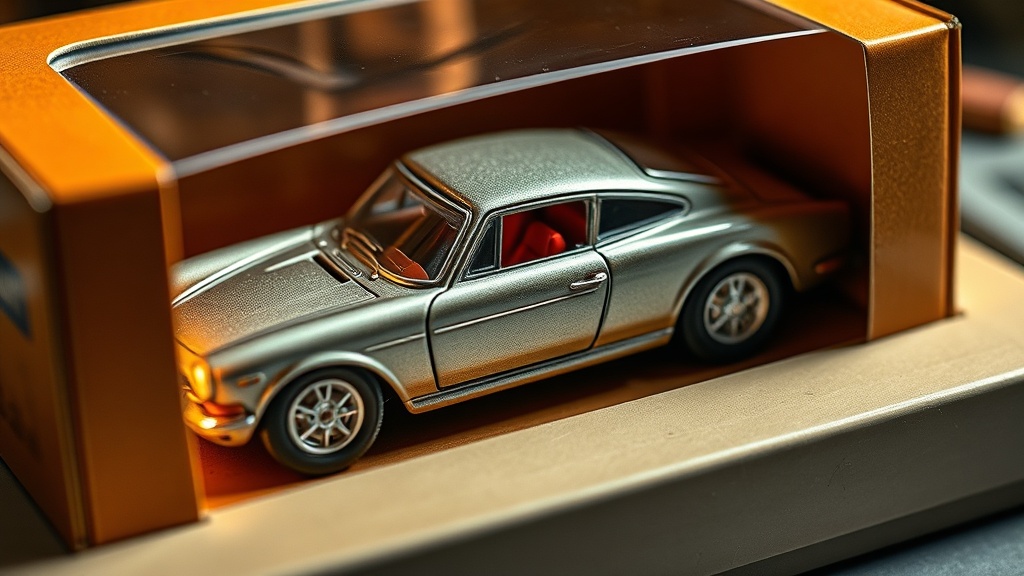
Why Your Diecast Car Box Might Be Ruining Its Value

A collector auctions off a 1:18 scale Autoart Porsche 911 GT3, expecting a premium price because the car itself is mint. However, the bidding stalls because the original window box is crushed, the side flaps are torn, and the internal plastic blister is yellowed. In the high-stakes world of diecast collecting, the packaging is not merely a container; it is a structural component of the item's total value. This post examines the technical reasons why box condition dictates market value and how you can mitigate the physical degradation of your packaging.
The Correlation Between Packaging Integrity and Market Value
In the precision manufacturing sectors I worked in, a part was never judged solely by its dimensions, but by its documentation and original casing. The same principle applies to diecast collecting. A "Mint in Box" (MIB) or "Never Removed From Box" (NRFB) designation carries a significant price premium over a loose model, even if the car itself is identical. When a collector sees a crushed corner on a Minichamps box or a sun-bleached Kaido House card, they immediately factor in a "condition discount."
The box serves as the first line of defense against environmental and physical stressors. When the box fails, the model is exposed to the very elements that cause long-term damage. A compromised box often signals to a buyer that the owner may not have been meticulous with the actual model's storage. This psychological barrier can be as damaging to your resale value as physical scratches on the paintwork.
Structural Integrity and the "Crush Factor"
Most diecast packaging relies on specific geometric strengths. A standard cardboard box uses its corners and edges to distribute weight and resist compression. If you stack heavy books or other diecast boxes directly on top of a single unit, you are applying uneven pressure that leads to "corner dinging" or structural collapse. Even if the car inside remains untouched, a box with crushed corners can reduce the resale value by 15% to 30%.
This is particularly prevalent with larger 1:18 scale models from brands like Kyosho or CMC. These boxes are often heavy and voluminous. If they are not stored in a dedicated shelving unit, the weight of the top boxes will eventually deform the bottom ones. This structural failure is permanent; cardboard fibers, once crushed or creased, cannot be "un-bent" without leaving visible stress marks or losing the original crispness of the edges.
Environmental Degradation: UV Exposure and Chemical Off-gassing
The packaging is often the first victim of environmental mismanagement. There are two primary enemies of diecast boxes: ultraviolet (UV) light and chemical volatility.
UV Damage and Color Fading
Cardboard and printed lithography are highly susceptible to UV degradation. If your collection is displayed on an open shelf near a window, the sunlight will act as a bleaching agent. You will notice the vibrant reds of a Ferrari or the deep blues of a Bugatti fading on the box art long before the car itself shows signs of fading. This is a critical red flag for collectors. A faded box suggests the model has been exposed to high light levels, which can also lead to the degradation of the plastic windows and the internal model's paint. To avoid this, ensure your display areas are shielded from direct sunlight or use UV-filtering acrylic cases.
The Danger of Plasticizers and Off-gassing
The clear plastic windows (blisters) and the internal trays are often made of PVC or other polymers. Over time, these plastics can undergo a process called off-gassing, where they release volatile organic compounds (VOCs). This often manifests as a "cloudy" or "foggy" appearance on the window. In some cases, the plastic can even become tacky or start to melt, a process accelerated by heat. This is common in lower-tier diecast or older vintage models stored in non-climate-controlled environments like attics or basements. Once the plastic window is clouded or degraded, the "shelf appeal" of the model is permanently compromised.
Common Mistakes in Box Management
To maintain the highest possible value for your collection, you must avoid common handling errors that lead to "shelf wear."
- Improper Stacking: Never stack diecast boxes vertically without a rigid support system. If you must stack them, ensure the heaviest, most structurally sound boxes are on the bottom, and use dividers to prevent lateral shifting.
- Tape Usage: Never use standard adhesive tape to "fix" a torn box flap. The adhesive in household tape is acidic and will leave permanent stains on the cardboard, and it can even seep through to the model. If a box needs sealing, use archival-quality, acid-free tapes designed for collectors.
- Handling Without Care: Picking up a box by the top flap or the thin plastic window can cause immediate creasing. Always lift a box from the base or the strongest structural part of the cardboard.
If you are concerned about the physical state of the model itself due to poor storage, you may want to review how to protect delicate diecast paint, as the same environments that ruin boxes often lead to paint issues.
Optimizing Your Storage Strategy
If you intend to treat your collection as an investment, your storage method must be as disciplined as a professional archive. A "set it and forget it" approach is often where value is lost.
Climate Control is Non-Negotiable
Temperature and humidity fluctuations are the primary drivers of both box and model degradation. High humidity can soften cardboard, making it more prone to crushing, and it can also lead to oxidation on metal components. Low humidity can make certain plastics brittle. Aim for a stable environment—ideền ideally between 40% and 50% relative humidity and a consistent temperature of 65-70°F (18-21°C). Avoid storing your collection in plastic bins that are airtight, as this can actually trap moisture inside if the air was humid when you sealed the bin.
The Use of Display Cases vs. Original Packaging
Collectors often face a dilemma: display the model out of the box to show off the detail, or keep it in the box to preserve the value. If you choose to display the model, do not simply leave the empty box in a drawer. Empty boxes are prone to collapsing and losing their shape. Instead, consider using high-quality acrylic display cases for the models themselves. This allows you to enjoy the engineering of the car while keeping the original packaging in a controlled, upright, and protected state. For more advanced display techniques, see our guide on elevating 1:18 diecast detail with LED precision to ensure your display is both beautiful and safe.
Summary Checklist for Box Preservation
Before you decide to store or sell a piece, run through this technical checklist to assess the health of your packaging:
- Edge Integrity: Are the corners sharp and crisp, or are they rounded and crushed?
- Surface Condition: Is the lithography bright and clear, or is there evidence of UV fading?
- Window Clarity: Is the plastic window transparent, or is there a milky/foggy residue from off-gassing?
- Structural Stability: Does the box hold its shape when handled, or is it soft and pliable?
- Seal Integrity: Are the original factory seals intact, or have they been compromised by heat or improper tape?
By treating the packaging with the same technical respect as the diecast model itself, you ensure that your collection remains a high-value asset rather than just a shelf of aging toys. Precision in storage leads to precision in value.