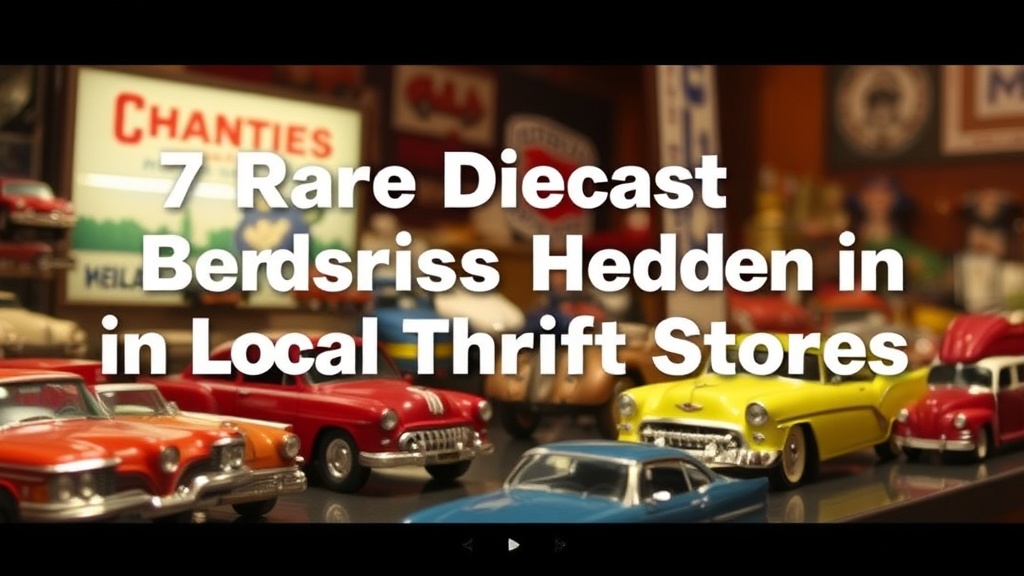
7 Rare Diecast Brands Hidden in Local Thrift Stores

The Forgotten European Manufacturers
Limited Run Boutique Brands
Vintage Promotional Models
Niche Regional Toy Labels
The Era of High-Detail Metal Models
Obscure Racing Team Collaborations
Small Batch Collector Series
Thrift stores are often treated as graveyards for unwanted household goods, but for the discerning collector, they are unrefined gold mines for high-end diecast-scale engineering. You might find a discarded box of kitchen utensils right next to a mint-condition 1:18 scale model that holds significant market value. This post identifies seven specific, high-quality diecast brands that often slip past the eyes of generalist thrift store workers and end up in the $2.00 clearance bins. Understanding these brands is the difference between finding a piece of junk and finding a museum-grade specimen.
What are the most valuable diecast brands to look for?
The most valuable diecast brands found in thrift stores are typically those produced by specialized manufacturers like Minichamps, Autoart, or CMC rather than mass-market toy brands. While a standard Hot Wheels car is a joy to collect, it rarely carries the high-margin resale value of a precision-engineered model. You're looking for weight, material density, and intricate detail—things that suggest a higher manufacturing cost.
When you're scanning a shelf, look for the weight first. A high-quality model often features a heavy diecast metal body paired with a high-grade resin or metal chassis. If a car feels suspiciously light, it's likely a budget-tier toy. If it has heft, you might have found a winner. This is especially true for brands like Autoart, which are known for their incredibly tight tolerances and realistic engine bay detailing.
One thing to watch for is the "feel" of the paint. High-end brands use multi-stage painting processes that result in a deep, lustrous finish. If the paint looks "grainy" or has a heavy orange peel texture, it's a low-grade piece. If it looks like a real automotive finish, hold onto it. You might even want to check Wikipedia's entry on die-cast toys to understand the different scales and materials used in manufacturing.
The Top 7 Thrift Store Brands to Identify
- Autoart: Known for incredible precision and realistic interior-to-exterior transitions.
- Minichamps: A staple for racing enthusiasts, often found in older, unboxed conditions.
- Kyosho: Exceptional detail in high-end supercars and classic racing models.
- Schuco: A German brand that often features high-quality opening parts and heavy metal construction.
- Spark: Primarily focuses on high-end resin models, often seen in racing livery.
- BBR: Extremely rare in thrift stores, but if you see a high-end Italian brand, check the weight immediately.
- Norev: Often found in the "toy" section but possesses a level of detail that surpasses standard diecast.
How can you identify a high-end model in a dusty bin?
You identify a high-end model by inspecting the fine details like door shut lines, engine bay complexity, and the quality of the rubber tires. A cheap toy will have wide gaps where the doors meet the chassis; a high-end model will have almost zero visible light through those seams. If the car has opening parts—doors, hood, or trunk—examine the hinges. They should move smoothly without any resistance or "play" in the hinge mechanism.
Check the tires. High-end models often use real rubber rather than hard plastic. This is a huge indicator of quality. If the tires look slightly weathered or have a matte finish, they are likely high-grade rubber. If you find a model with damaged tires, you might need to learn about preventing rubber deformity once you bring it home to ensure the set remains stable.
Don't overlook the interior. A standard toy has a molded plastic dashboard. A high-end model will have separate parts for the dashboard, steering wheel, and even instrument clusters that look legible under a bright light. This level of-detail is what separates a "toy" from a "scale model."
| Feature | Budget Tier (Hot Wheels/Matchbox) | High-End Tier (Autoart/Minichamps) |
|---|---|---|
| Material | Zinc alloy / Plastic | Diecast Metal / Resin / High-grade ABS |
| Tires | Hard Plastic | Real Rubber |
| Opening Parts | Rarely or basic | Highly detailed doors/hood/trunk |
| Weight | Light/Hollow feel | Substantial/Heavy feel |
Why are these brands often found in thrift stores?
These brands often end up in thrift stores because they are frequently sold as "display pieces" rather than "toys," meaning they are often treated as decor rather than playthings. A collector might have had a display shelf that became damaged, or a person inheriting an estate might see a high-end Autoart model as just "a toy car" and price it accordingly. The lack of a box is the biggest factor here—unboxed models are much harder for the average thrift store worker to value.
I've seen collectors spend hours in estate sales looking for these specific items. It’s a different game than browsing a toy fair. In a toy fair, you know what you're looking for. In a thrift store, you're hunting for the one item that someone else overlooked. If you see a car that looks a bit too "serious" to be a child's toy, pick it up. Weigh it in your hand. If it feels like a piece of industrial machinery, it's worth a second look.
It’s worth noting that many of these brands are no longer in mass production in the same way, making them more susceptible to being overlooked. A 1:18 scale model from a defunct brand is a treasure. If you find one, make sure you have a plan for storage. You'll eventually need to look into building a custom acrylic display case to protect that investment from dust and UV light.
If you do find a high-end piece, don't just throw it in your bag. Handle it with care. Even a small scratch on a high-end paint job can significantly drop the value. I always recommend practicing white-glove handling protocols from the moment you pull it from the bin. It's a habit that separates the hobbyists from the true collectors.
One final tip: look at the bottom of the car. Most high-end models will have the brand name, scale, and sometimes a serial number etched or printed on the baseplate. If you see "Autoart" or "Minichamps" printed on the bottom, you've struck gold. If it just says "Made in China" on a generic plastic base, it's likely a standard toy. The presence of a branded metal baseplate is a massive indicator of a professional-grade model.
Keep an eye out for the "odd" sections. Sometimes, the most valuable items aren't in the toy aisle. They might be in the "knick-knack" or "home decor" section, sitting next to a ceramic vase or a clock. These models were designed to be displayed on a desk or a shelf, not in a toy box. That's exactly why they end up in the wrong place.